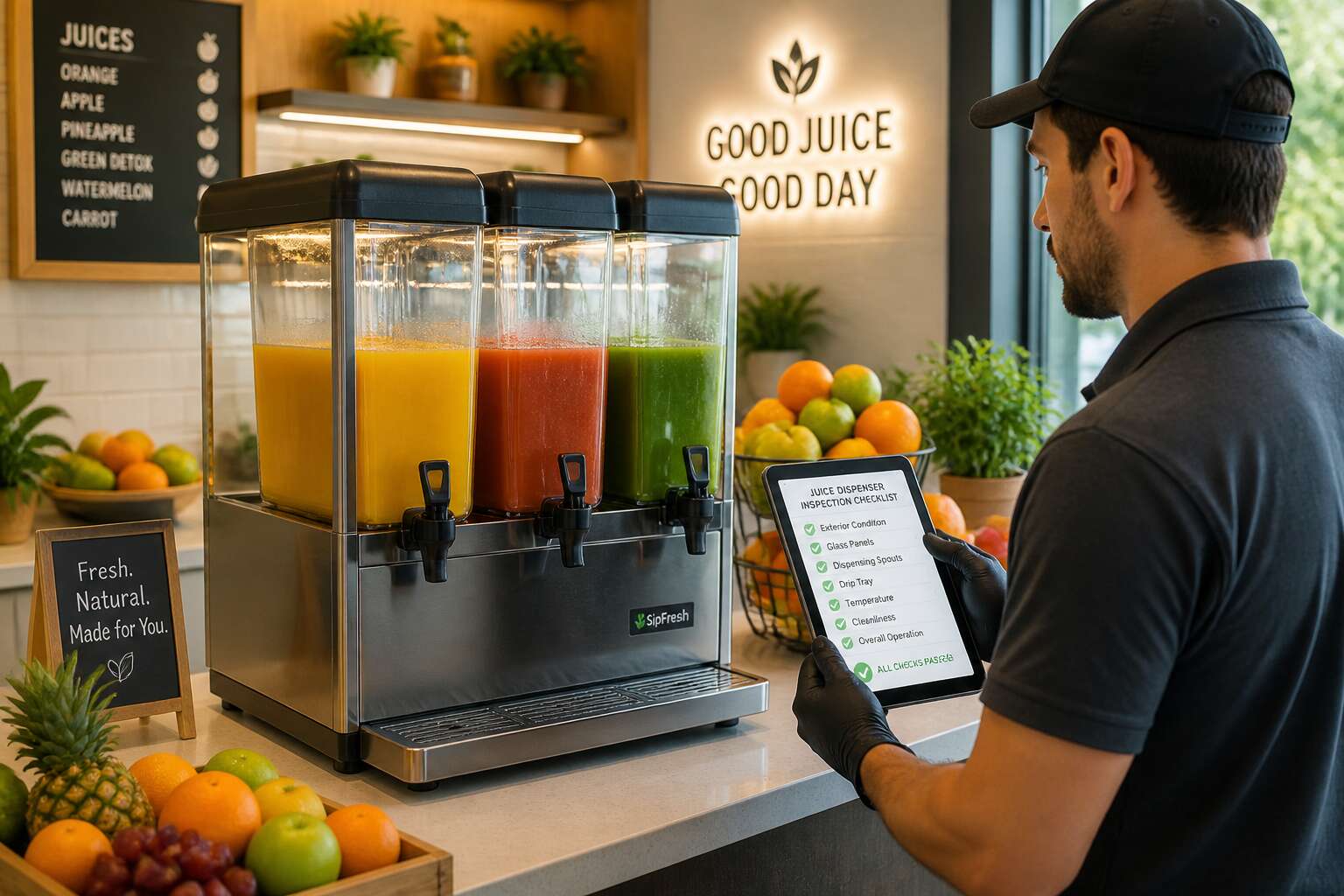
Why Regular Dispenser Inspections Matter
Every morning across South Africa, café owners trust their juice dispensers to deliver pure refreshment. But one overlooked valve can turn a bustling rush into a regulatory headache. Regular inspections are the quiet guardians between profit and loss.
In my years writing about food safety, I have seen how juice dispenser checkers catch the subtle warnings that eyes miss. A sticky nozzle or an odd smell signals microbial growth. Those signs never announce themselves loudly. Left alone, they multiply quickly.
- Check seals for wear every week.
- Inspect hoses for discoloration.
- Test temperature readings daily.
This simple routine protects your customers and your reputation. Neglect costs more than money; it costs trust.
Critical Components to Examine During a Check
Ask any café owner in Durban about their juice dispenser and you will get a sigh. Juice dispenser checkers like me have spent years inspecting these machines in South Africa, and the failures repeat themselves in predictable ways. The first component I examine is the pump housing. A worn diaphragm causes inconsistent pours, which customers notice immediately.
The nozzle assembly deserves attention. Sugar residue builds up in the crevices and alters the flow pattern. Then there is the chilling coil, which many operators forget. A compromised coil pushes lukewarm liquid into the cup, ruining the product. That is a reputation killer!
My usual checklist:
- The drip tray alignment, which affects hygiene
- The syrup line connections for micro-cracks
- The pressure gauge readings across different settings
Each component reveals how the unit was treated. Juice dispenser checkers spot everything, from neglected cleaning schedules to faulty valves that quietly drain profit margins.
Step-by-Step Guide to Performing a Dispenser Audit
One faulty valve can ruin an entire batch of citrus blend. That is why I never skip the basic safety step: switch off the unit and disconnect the power before touching anything. The electronics are fragile, and a careless spill could cost you more than a fix. Then remove the drip tray and nozzle assembly. Examine every seal for cracks or brittleness, because worn rubber means it is time for juice dispenser checkers that meet consistent standards.
Work through these checks in order:
1. Inspect the dispensing valve for blockages.
2. Measure the flow rate per cup against your serving target.
3. Verify the temperature stays within the safe range.
4. Swab the interior surfaces to check for bacterial residues.
Take note of any unusual sounds while the pump runs, as these often hint at air pockets. Log your readings on a simple audit sheet. Compare each value to the manufacturer guidance, then flag any deviations. Twenty minutes of focused work now prevents a messy breakdown during peak service. Trust me, that is a trade worth making.
Common Issues Found in Beverage Dispensers and How to Resolve Them
Juice dispenser checkers reveal that nearly seven out of ten commercial beverage dispensers lose efficiency within their first year, yet most failures stem from three preventable problems. Sediment from pulpy juices clogs valves silently. Flush the lines with warm water weekly to avoid residue build-up.
Temperature drift is another culprit. A faulty thermostat can turn a refreshing cup into a lukewarm disappointment. Verify the calibration monthly, and replace any worn seals.
Common issues include:
- Clogged nozzles from dried sugar.
- Inconsistent carbonation levels.
- Leaking drip trays.
Resolving these often takes less than ten minutes. A quick visual inspection of the drips and a firm press on the nozzle usually reveals the exact fault. For South African operators, high humidity accelerates mould growth, so wipe down spouts with a food-safe sanitiser daily. Routine attention keeps the equipment performing reliably throughout service hours.
Tools and Technologies for Streamlining Dispenser Checks
Running checks on a busy Friday can overwhelm even a seasoned crew. I’ve watched teams waste hours on paper logs. Cloud based systems fix that. They capture temperatures and cleaning times instantly. Some setups even use IoT sensors to flag issues before they become costly. For juice dispenser checkers, this means fewer manual records and more real time oversight.
Consider these technologies:
– Digital checklists with photo evidence
– Predictive maintenance software
– Barcode scanning for each valve
Each tool cuts down on human error. The result is a more consistent product and less downtime. That’s a smarter way to work.
Best Practices for Establishing a Routine Check Schedule
Most café owners in Johannesburg only check their juice dispenser checkers when the machine starts sputtering. That’s a costly mistake! A routine schedule prevents downtime and keeps your customers happy. I’ve seen too many operators scramble at peak hours because they skipped a simple weekly inspection.
Here’s what works for me: set a recurring reminder every Monday morning. Spend ten minutes checking seals, hoses, and the dispensing nozzle. For high-volume locations, add a mid-week check. The juice dispenser checkers are your early warning system, so treat them seriously.
A practical schedule looks like this:
– Daily: wipe down exterior and verify pressure.
– Weekly: inspect internal components and clean filters.
– Monthly: test calibration and replace worn parts.
Adjust based on your usage. The goal is consistency, not perfection. You’ll save money and avoid unexpected breakdowns.



0 Comments