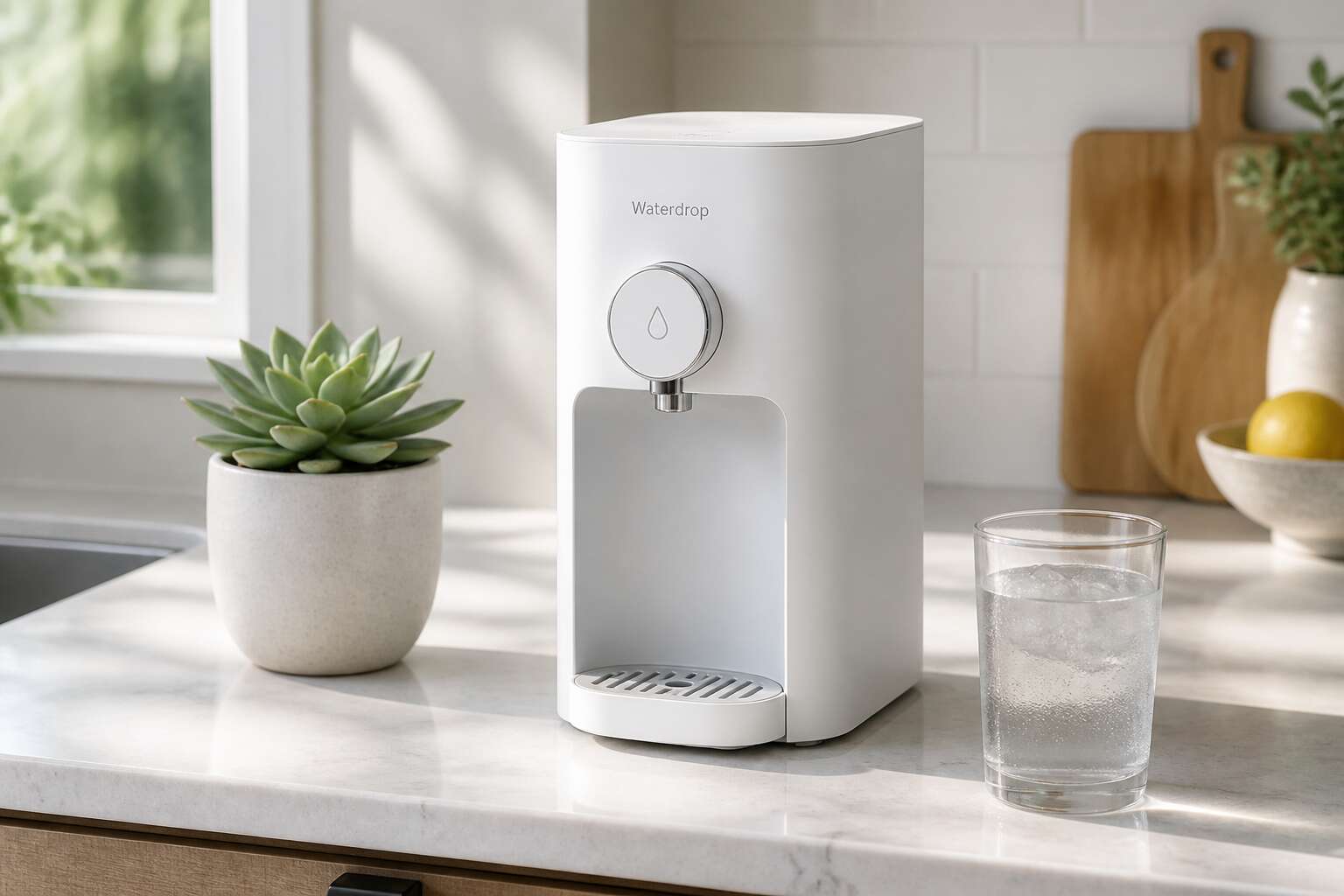
The Rise of Compact Hydration
What Makes a Dispenser Compact?
Compact hydration is gaining ground in South African homes precisely because standard dispensers fail in tight spaces. A water dispenser mini now appears on desks, bedside tables, and rental kitchen counters. The shift is practical: fewer people want a floor standing unit monopolising their available square metres.
What makes a dispenser compact? Designers remove the compression tank and reduce the compressor footprint. I have seen units that shrink depth below 30 centimetres without sacrificing cooling speed. Slimline reservoirs replace wide bottles, while the heating and cooling elements integrate into a single vertical column. That integration is the defining feature.
Typical space-saving features include:
- Reservoirs under five litres
- Hot and cold taps stacked in one column
- Detachable drip trays that reduce depth
Who Benefits from Smaller Units?
Square metres in South African cities are precious. A kitchen counter in a new Johannesburg apartment can measure less than a desk in a Pretoria office. Yet people still want chilled water without giving up half their floor space. That is where the water dispenser mini solves the spatial problem.
Students in university res rooms are the most obvious beneficiaries. They fit a bed, a microwave, and a dream into one narrow space. A compact unit slides in beside the kettle without demanding a corner of its own. Remote workers in converted cottages gain just as much. They reclaim the floor space once claimed by a floor standing unit that mostly dispensed dust.
The water dispenser mini suits almost anyone whose home moves with them. Renting means flexibility. This machine offers it without a single plumbing change.
Comparing Countertop and Freestanding Models
The freestanding water cooler reigned for decades. Its downfall is not the price, it is the footprint. A countertop water dispenser mini occupies a square of granite no larger than a toaster. Compare the two and the distinction becomes practical. Freestanding models carry a larger reservoir, often 10 litres or more, and suit a waiting room or open-plan kitchen. Countertop units trade that capacity for proximity, sitting beside the coffee machine and shortening the distance between the glass and the person pouring.
The rise of compact hydration is a story about permission. A freestanding unit demands a designated corner and a nod from the landlord. A water dispenser mini asks only for a plug point and a stable surface. Honestly, that is the appeal. Consider what each offers:
- Freestanding: larger reservoirs, but a permanent claim on floor space.
- Countertop: smaller refills, yet the freedom to move with the user.
Essential Features for Small-Scale Dispensers
Temperature Control Options
Temperature control is the quiet engine of any water dispenser mini unit, yet it is often the most misunderstood feature. While a compact footprint solves spatial problems, thermal performance dictates whether that unit becomes a daily workhorse or a frustrating ornament. The engineering challenge lies in balancing power consumption with rapid cooling or heating cycles, a delicate equilibrium that smaller machines handle with varying degrees of finesse.
The reality is that not all thermoelectric systems are created equal. A compressor based mini dispenser will chill water far more aggressively than its thermoelectric counterpart, though it introduces operational noise and increased energy draw. For office desktop scenarios, this trade off matters. A single person refilling a bottle every hour does not require industrial grade chilling, but a shared space with four users demands faster recovery times between pours.
Consider the specific thermal requirements that genuinely alter usability:
- Cold tank capacity measured in litres, which directly impacts how many consecutive cups you can pour before warm water arrives
- Hot water safety locks, essential for homes with children or busy reception areas
- Dispensing speed per 200ml, a metric that separates premium models from budget alternatives
Some units offer adjustable thermostats, allowing users in warmer South African climates to override default settings. A dispenser calibrated for Gauteng summers might need its cold setting reduced to maximum simply to deliver water below ambient room temperature. Without this flexibility, the unit underperforms precisely when hydration matters most.
For the truly compact models, the simple truth remains that you cannot have unlimited hot water volume while maintaining a slim silhouette. The internal heating element requires physical space to operate safely. Buyers should therefore assess whether their primary need is rapid boiling for tea or consistent cold water for gym bottles, because this single decision determines which thermal configuration is acceptable.
Filtration Systems Explained
According to the South African National Standards, tap water quality varies dramatically across municipalities. That is why the filtration core inside a water dispenser mini often matters more than its cooling power. A basic carbon block catches chlorine and sediment, while an ultrafiltration membrane handles protozoa such as giardia. Reverse osmosis systems push further, removing dissolved salts and heavy metals, but they waste three litres of water for every one they produce. Before buying, check the filter’s micron rating and total dissolved solids reduction. Here is what I look for in a small unit:
- Replaceable filter cartridges that do not require specialist tools
- A flow rate that does not drop below one litre per minute
- Certification from the South African Bureau of Standards
Without these elements, a compact dispenser simply shifts the problem. You are not hydrating better, you are paying for a different bottle!
Safety Features for Families
When children are around, a water dispenser mini must do more than chill. The hot water tap is the first risk. A dual-action child lock, where two motions happen at once, prevents small hands from operating it. Look for a tap that stays cool to the touch even after hours of use.
Stability matters equally. A narrow base turns a nudge into a spill. Rubber feet and a low centre of gravity keep the unit planted on kitchen counters.
- Auto shut-off when the tank is empty
- Leak-proof valves that resist pressure changes
- Food-grade plastic without bisphenol A
Each feature reduces the odds of a burn or a flood. The right water dispenser mini quietly disappears into your routine.
Smart Technology Integration
In South Africa, where load shedding remains a fact of life, a water dispenser mini with a decent reservoir is more survival tool than luxury. Essential features start with a tank you can actually lift when full. A transparent water level indicator prevents the awkward mid-brew empty. The pump should handle varied water pressure, especially in complexes with shared systems.
Smart integration adds genuine utility. Some units now pair with phone apps that track filter life and consumption. You can set reminders. That sounds trivial until you taste unfiltered municipal water.
Consider these practical essentials:
- A drip tray that slides out for cleaning
- A quiet compressor for open-plan living
- A dispenser button that doesn’t require a PhD in finger gymnastics
The smart features add convenience without demanding constant attention. For the price of a few coffees, the water dispenser mini earns its counter space.
Placement and Space Optimization
Kitchen Counter Solutions
The average South African kitchen counter holds fourteen appliances, yet most households reach for only three each day. A water dispenser mini reclaims this space because it fits where nothing else will!
Positioning depends on the prep zone, the span between the sink and the stove. In my experience, the unit’s narrow base rests beside the kettle without crowding the cutting board. For awkward layouts, the practical options are:
- The inner corner of an L shaped counter, which usually holds a fruit bowl and nothing else.
- The gap between the microwave and the wall, where a slim unit slides in flush.
- The stretch beside the sink, placed clear of the splash zone but close to the washing basin.
A compact dispenser turns unused counter into a working station. It sits within easy reach of the prep zone, but clear of the toaster and the kettle. Placing it correctly saves trips across the room.
Home Office and Bedroom Setups
For home offices, the water dispenser mini changes the dynamic of a desk corner. The typical workspace in Johannesburg has room for a laptop, a lamp, and little else. A compact unit sits on a side table or the edge of a desk without dominating. It becomes part of the workflow, not an interruption.
Bedrooms present a different challenge. The bedside table holds a book, a phone, and a glass. Adding a water dispenser mini requires a deliberate choice about what stays. Some place it on a dresser near the bed, keeping the sleeping area clear while maintaining easy access at night.
- Choose a spot away from direct sunlight and heat sources.
- Keep the dispenser within arm’s reach of your usual seating position.
- Allow clearance for filling bottles or cups without moving furniture.
Placement logic differs from the kitchen. Movement in a bedroom or office is smaller and more frequent. A water dispenser mini positioned correctly reduces the friction of staying hydrated, which matters when deadlines or rest are on the line.
Rental and Dorm-Friendly Alternatives
Most student leases in South Africa treat a single nail hole as a deposit deduction. The water dispenser mini answers that problem by requiring no installation and leaving no trace. It balances on a shelf, a storage crate, or the corner of a desk. At semester end, it slides into a backpack and leaves without protest. That portability changes how you treat space in a room that is already doing three jobs.
Consider what a dorm room actually contains: a bed, a wardrobe, and a desk that also serves as a dining table. The water dispenser mini fits on the one surface that survives all three functions. Its footprint matches a standard dinner plate. That means it slots between a laptop and a stack of textbooks without rearranging your life.
Rented flats add another constraint: wall fixtures. Most landlords frown on anything that requires a drill. The compact unit sits on a counter, a windowsill, or a speaker stand repurposed for hydration. No mounting brackets. No permanent marks. For tenants in Johannesburg and Cape Town who move every twelve to eighteen months, that independence is the selling point.
Maintenance and Long-Term Care
Cleaning Schedules That Work
Cleaning a water dispenser mini is not a chore to postpone. Stagnant moisture inside the reservoir creates a biofilm that compromises both taste and hygiene. A consistent schedule prevents this entirely. For a compact unit, the process takes less than ten minutes, but the payoff in water quality is substantial. You should wipe down the exterior drip tray weekly to prevent mineral spotting and bacterial buildup.
For the internal tank, a monthly deep clean is non-negotiable. Use a mild vinegar solution to dissolve scale, then run two full cycles of fresh water to rinse thoroughly. This process protects the heating element from premature wear caused by mineral deposits, a common failure point in smaller machines.
1. Unplug the unit and remove the water bottle.
2. Drain any remaining water from the tank.
3. Add a vinegar and water solution to the reservoir.
4. Let it sit for 15 minutes, then drain completely.
5. Rinse with fresh water until the vinegar smell is gone.
The filter in your water dispenser mini also demands attention. If your model has one, replace it every two to three months, depending on water hardness in your area. Ignoring the filter leads to slower dispensing speeds and a flat, plastic-like taste in your drinking water. In high humidity environments, check the exterior connections for condensation buildup, which can attract dust and create a sticky residue that is difficult to remove later.
Descaling and Filter Replacement
Mineral scale is the leading killer of small appliances like the water dispenser mini. Hard water leaves behind calcium deposits that clog internal lines and reduce heating efficiency. Descaling keeps the unit working at full capacity, preventing expensive repairs and sluggish flow. The process requires minimal effort but delivers immediate results.
Run a descaling solution through the system on a quarterly basis. Citric acid works well for stubborn buildup and is safe for plastic components.
1. Mix a descaling agent with warm water according to the manufacturer’s instructions.
2. Pour the solution into the reservoir and allow it to circulate.
3. Let the unit sit for 20 minutes to break down the scale.
4. Flush the system with clean water until the solution is completely gone.
Filter replacement follows the same principle of prevention. A clogged filter puts strain on the pump and motor, forcing the water dispenser mini to work harder than necessary. Weak flow and unusual noises signal a filter past its prime. Replace it on schedule, not when problems appear. Regular attention to these maintenance tasks extends the lifespan of your unit by years, keeping every glass of water fresh and clean.
Troubleshooting Common Issues
Every appliance gives warning signs before it fails. A water dispenser mini that hums louder than usual, or drips long after pouring, deserves attention. Acting early prevents the frustration of a sudden breakdown.
Start with the simplest checks. A loose cord, a misaligned reservoir, or a blocked vent explains most intermittent faults. If those check out, the pump or thermostat likely needs attention. South African households also contend with fluctuating mains pressure and load shedding, both of which can disrupt the internal sensors of your water dispenser mini.
A systematic diagnosis reviews four components in order:
- The power supply and all connections.
- Visible leaks or cracks in the reservoir.
- Irregular sounds from the compressor.
- The consistency of flow and temperature.
Keep a written log of each symptom. A clear record gives a technician a precise map to the fault, saving time and money.
Winter Care and Storage
“Will my water dispenser mini survive the frost?” That question arrives every May, when the Highveld chill creeps into kitchens and boardrooms alike. A compact unit is resilient, but winter demands a different kind of attention than summer’s relentless heat.
In-use care during cold months starts with placement. A countertop model sitting near a drafty window or an exterior wall is asking for trouble. The internal heating element works harder to maintain temperature, which strains the thermostat and increases energy consumption. I have seen units fail simply because a curtain blew between the wall and the reservoir on a cold July night. Move the machine to a stable, interior position. If the room temperature dips below 10°C, the water lines can thicken, reducing flow rate and confusing the cold sensor.
When the unit must be stored, either for a long holiday or a seasonal closing of a holiday home, a proper process prevents dormant damage. Empty the tank completely, then run the pump until every drop exits the line. Dry the reservoir with a lint-free cloth. Leave the lid open for 24 hours so internal moisture evaporates. Here is the sequence I recommend:
1. Unplug the unit and allow it to reach room temperature for two hours.
2. Drain all water from the reservoir and the drip tray.
3. Run the dispensing cycle until the pump runs dry and the motor stops.
4. Clean the exterior with a dry cloth, focusing on the spout area.
5. Wrap the power cord loosely around the base and secure it with a tie.
The drying step is critical. A water dispenser mini left sealed with residual moisture becomes a breeding ground for biofilm, which no amount of descaling later will fully remove. In coastal regions, the humidity works against you; in the dry Karoo, the air does the job in half the time. After storage, never plug the unit straight into the wall. Give it six hours to acclimatise, then inspect the seals for any cracking caused by the temperature shift. A slow rehydration, with a quarter tank of fresh water for the first cycle, protects the internal gaskets from thermal shock. That small ritual, performed every winter, keeps the machine faithful for years.
Extending Product Lifespan
The motor inside a water dispenser mini is the same class of component used in much larger machines. That durability only holds if you respect its limitations. Running the pump without water, even for a few seconds, wears the impeller faster than years of normal use. I always tell people to listen for the change in pitch when the tank empties, then switch off immediately.
Long-term care means paying attention to the soft parts. Gaskets and valves age through ozone exposure and mineral deposits. A quarterly inspection of the spout and drip tray catches problems before they become repairs.
- Wipe the reservoir rim after each refill.
- Check the power cord for cracks.
- Replace the filter on the manufacturer’s schedule.
That routine costs two minutes but adds years to a water dispenser mini! Power surges from load shedding remain the common cause of circuit board failure, so connect the unit to a surge protector.
Eco-Friendly and Cost Considerations
Reducing Plastic Bottle Waste
South Africa landfills over 100 million plastic bottles each year, a number that climbs with every convenience purchase. A water dispenser mini turns that pattern around by making tap water filterable, chilled, and accessible without packaging.
The cost contrast reveals itself quickly. Buying bottled water adds up to a monthly budget strain, while a compact dispenser asks for electricity and occasional filter swaps. The financial advantage grows with each litre.
- Bottled water costs roughly R12 per litre
- Filtered dispenser water often lands under R1 per litre
- Filter replacements run a fraction of bulk bottle purchases
Those numbers only capture the wallet side. What strikes me more is the environmental side, which avoids truck deliveries, plastic production, and waste collection. A water dispenser mini supports that reduction in a small space, making eco-conscious habits feasible for apartments and offices alike.
Energy Consumption Comparisons
Most South Africans don’t think about the electricity a kettle gulps down. Eskom’s own data shows a 2kW kettle running for 10 minutes consumes about 0.33 kWh. Do that twice a day, and you are burning through nearly 20 kWh a month. A water dispenser mini uses insulated tanks and small compressors. They keep water hot or cold for hours without continuous reheating. My countertop unit draws only 0.1 kWh per day in standby mode.
That comparison changes the financial picture entirely. The monthly energy cost for a dispenser sits at roughly R30. The same month of kettle use costs over R100, and that excludes the water wasted while waiting for a boil.
– A kettle heats 1.5 litres at once, often more than needed.
– A water dispenser mini heats 200 ml portions on demand.
– The dispenser’s cold function replaces a fridge water jug.
The real savings come from the complete system. A dispenser eliminates the forgotten boiled kettle and the reheating cycle. It removes the need to purchase bottled water for guests. Every avoided R30 case of water feels like a small victory. The energy footprint of bottling and transporting that water far exceeds the dispenser’s modest draw. For me, this is where the long term expense becomes a compelling story of efficiency.
Budget-Friendly Buying Guide
South African municipal water tariffs climbed 6.8% in 2024, and every litre poured down a sink while waiting for hot water is money gone. A water dispenser mini changes that calculation. It dispenses exactly what you need, nothing more.
Budget-friendly models under R1,500 still offer brass heating elements and food-grade tanks. The eco advantage shows in the absence of plastic. Skip the 5-litre bottles entirely. A water dispenser mini fits into that scheme without demanding a premium.
Consider these points when shopping on a budget:
– Check the standby draw; lower watts mean lower monthly bills.
– Look for drip trays that detach, as they last longer.
– Verify the tank is insulated, not just double-walled.
My own unit paid for itself within seven months. That is the quiet victory of a modest appliance.
Refillable Bottle Compatibility
A 5-litre bottle of retail water costs around R30 in Johannesburg. The same volume from the municipal tap costs under a rand. That gap is enormous! A water dispenser mini with refillable bottle compatibility captures that difference.
Compatibility matters more than brand names. Many compact units use a universal push-fit connector, so your existing glass or BPA-free bottle works without adapters. Check the inlet pipe diameter first. Some models require proprietary bottles, which defeats the purpose of refilling.
The environmental case is straightforward.
- One refillable bottle replaces roughly 100 single-use plastic bottles annually.
- A refillable bottle lasts for years, so per-litre costs drop towards zero quickly.
- No energy goes into bottling, transporting, or chilling a separate product line.
My own water dispenser mini has run on the same 5-litre bottle for eight months. The fittings remain tight, and the water tastes identical to the pricier brand.




0 Comments