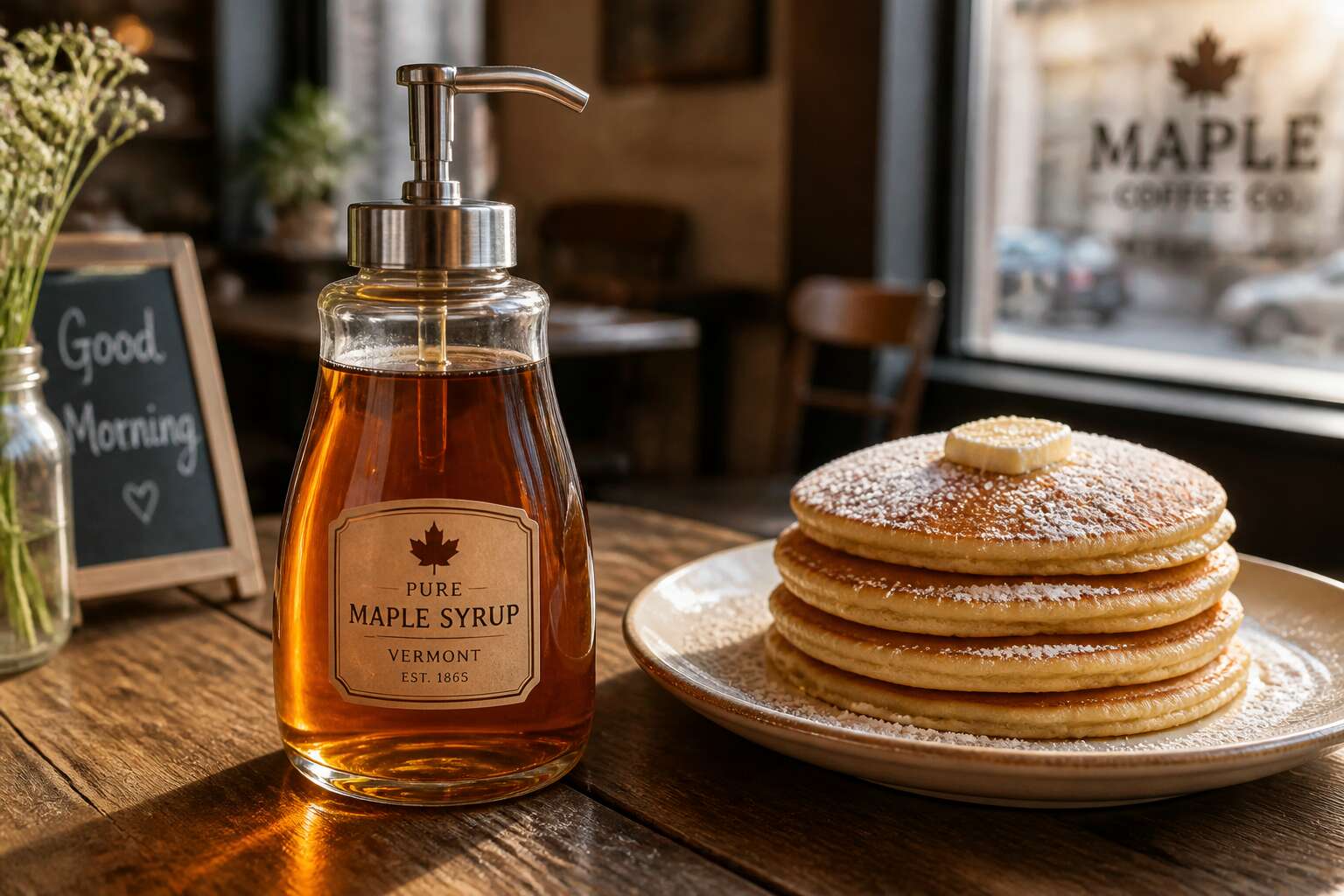
Choosing the Right Dispensing Solution for Your Kitchen
Glass, Plastic, or Stainless Steel
Glass lets you see the syrup level at a glance, which helps when you are mid-recipe and need reassurance. Plastic is lighter and survives the occasional knock, a real advantage in a busy kitchen. Stainless steel blocks light and keeps the contents cooler for longer.
Your choice also shapes how the syrup pours and how often you clean it. Some syrup dispensers suit daily breakfast use, while others are better for occasional entertaining.
- Glass: easy to monitor, heavier, needs careful handling
- Plastic: lightweight, robust, may retain odours
- Stainless: durable, opaque, keeps contents protected
Consider your counter space and how the dispenser will be used. The right material turns a simple pour into a quiet pleasure.
Pump vs. Pour Spout Designs
A pour spout demands a steady hand and a quiet moment. You tilt the bottle and the syrup answers in a thin, deliberate stream. A pump answers without ceremony, a single measured portion per press. This difference matters more than material ever will.
The pour spout exposes every flaw. It leaves a stickiness around the neck, a residue that powders into dust if neglected. The pump hides its interior, so the syrup level stays invisible until the last drop. Both will test you in different seasons. Highveld heat thins your pour spout to a trickle. Winter cold makes a pump feel sluggish.
Consider how the syrup dispensers fit the routines you have built in your own kitchen.
- Pour spouts suit syrups you use sparingly, where each drop counts.
- Pumps suit daily service, where speed and cleanliness outweigh ceremony.
The syrup dispensers worth keeping are the ones that work without your attention. Let the right mechanism disappear into the morning.
Capacity Considerations
I have watched a 250ml bottle die on a busy Saturday. The syrup dispensers that survive are sized for how you actually pour. A small vessel suits a weekend treat. A large one handles daily coffee service.
Before you commit to a volume, consider three things:
- How many servings you pour each week.
- The counter space between your kettle and your toaster.
- Whether the syrup will sit long enough to thicken or crystallise.
Every choice changes your refill frequency. Refilling is where most mess begins. Match the syrup dispensers to your demand, not your shelf. A bottle that is too large tempts you to overfill. A bottle that is too small sends you to the pantry twice a day. Your mornings will move faster when the last drop arrives exactly when you need it!
Ease of Cleaning and Maintenance
A syrup dispenser accumulates more than syrup. Sticky films form on the inner wall, crystals lodge in the spout’s seam, and the smell of old caramel persists after a wash. The ease of cleaning determines how often you actually clean.
Examine the design before purchase. A removable spout simplifies the task. A wide opening grants access to the bottom. Hidden angles create future regret. The gasket is the first place to collect mould, so it must come out without force.
- Check that every part separates by hand.
- Confirm the plastic or metal survives hot water.
- Test whether the residue slides off with a sponge alone.
Syrup dispensers that clean well accept a quick rinse and leave no trace in hidden angles. The right one does not require soaking or a dedicated brush.
Maximizing Efficiency in Commercial Settings
Speed of Service and Portion Control
In a busy Johannesburg café, every second counts. The right syrup dispensers let staff serve customers faster while keeping each serving consistent. A pump mechanism delivers the same 10ml pour every time, which matters when you are selling hundreds of coffees a day.
The benefits extend beyond speed:
- Faster queue turnover during peak hours
- Reduced product waste from overpouring
- Consistent taste that keeps customers returning
Bartenders and baristas can keep their rhythm without measuring each shot manually. That consistency builds trust with regulars who expect the same sweetness in every cup. For high volume operations, precision is not a luxury, it is the difference between profit and loss. Well designed syrup dispensers remove guesswork from the equation entirely, which is exactly what a busy kitchen needs.
Reducing Waste and Spills
In the frantic minutes of a morning rush, a tipped bottle can halt service completely. A sticky counter draws flies, slows the next order, and pulls a barista’s focus away from the register. Well-built syrup dispensers change that. Weighted bases and secure closures keep product upright and contained, even when knocked against a steel countertop.
- Drips stay in the nozzle instead of pooling on the drip tray
- Lids click shut after every pour, so accidental spills stop before they start
- Clean hands and dry countertops keep the workflow moving
Waste quietly erodes margins. Leftover syrup clinging to the inside of a pour spout is money that never reaches the till. Precision nozzles cut drip loss dramatically. My own experience at a Durban juice bar confirmed this. We switched to quality syrup dispensers and watched our refill orders drop noticeably within a month!
Durability Under High-Volume Use
In a busy Sandton café, syrup dispensers get slammed more times in one Saturday than most home kitchens see in a decade. Commercial counters vibrate, shift, and absorb constant impact. Cheap plastic units crack, lids shear off, and threads strip within weeks.
A syrup dispenser that survives a full financial quarter without failure reduces both labour and equipment invoices. Reinforced neck joints and shatter-resistant reservoirs handle the abuse. Need to know what to look for in a heavy-use bar?
- Die-cast metal bases that do not fracture on tiled floors
- Gaskets that maintain seal integrity after 10,000 pours
- Replacement parts stocked by South African suppliers
Maximizing efficiency in commercial settings depends on fewer interruptions. When a dispenser breaks, the queue backs up and the entire service flow stalls. Durable syrup dispensers keep the line moving through peak periods.
Branding and Customization Options
Efficiency in a working bar is not simply about speed. It is about recognition at a glance. Custom color bands and engraved logos on syrup dispensers let staff tell caramel from vanilla without lifting a bottle. That small reduction in decision time compounds across a full shift.
Branding also carries the establishment’s identity into every cup. Take a café in Maboneng: it can stamp its name onto the counter itself, and I have seen customers glance at that mark before ordering!
- Interchangeable decorative rings allow seasonal rebranding in moments
- Laser etched names survive commercial dishwashing cycles
- Colour coded caps shorten training for new baristas
The result is less delay during peak hours. Syrup dispensers that communicate their contents and their origin keep queues moving while preserving the look of the service counter.
Cost-Effectiveness for Business Owners
The economics of commercial syrup dispensers extend beyond the purchase invoice. A well designed unit cuts labour minutes during rush hours and reduces the volume of product lost to careless pouring. In Johannesburg coffee shops, owners count the cost per serve, not the cost per bottle. Efficient dispensing equipment pays for itself across a few trading cycles.
The mathematics are simple:
- Fewer spills mean less syrup purchased each month
- Accurate portions stop overpouring that quietly erodes margins
- Faster service allows the same staff to serve more customers
Every rand saved on wastage flows directly to the bottom line. For a business moving high volumes of flavoured drinks, syrup dispensers turn a consumable cost into a controlled expense. That matters when margins are thin and customer expectations are high. Precise delivery mechanisms protect revenue in ways that appear clearly in monthly reports.
Creative Uses Beyond the Breakfast Table
Flavoring Coffee and Espresso Drinks
Coffee culture in South Africa has shifted, and syrup dispensers now sit beside espresso machines from Cape Town to Johannesburg. These vessels do more than hold sweetness. They give baristas precise control over flavor layering, from a measured vanilla shot to a delicate caramel drizzle that leaves the crema intact.
Cafes rotating seasonal specials find particular value here. A dedicated dispenser for each syrup keeps the station organised and the pours consistent, whether the order is a classic cappuccino or a bold affogato. The hand feel alone changes how a drink comes together.
Home espresso enthusiasts can adopt the same approach. A compact dispenser next to the grinder brings cafe-like rhythm to a morning flat white, turning routine into something worth savouring.
Cocktail Syrups and Bitters
Order a negroni in Cape Town and watch the bartender reach for a dispenser, not a jigger. Cocktail programs adopt syrup dispensers for the same reason coffee bars did: precise control over sweet and bitter elements.
The same vessel that holds vanilla syrup at a coffee bar can dispense a house-made honey syrup for a whiskey sour. Bartenders use these dispensers for grenadine, orgeat, and shrubs. A few millilitres can shift a drink’s entire character.
- A pump dispenser for high-volume simple syrup
- A pour spout for thicker fruit cordials
- A small glass bottle for aromatic bitters
At a private dinner in Constantia, I watched a host use a dispenser to dress dessert plates with a rooibos syrup. The pour was deliberate and clean, matching the precision of the bar rail.
Dessert and Baking Applications
Pastry chefs in Johannesburg are abandoning the ladle. Syrup dispensers give them the same command over a dessert plate that a bartender has over a negroni. A pump top delivers a consistent drizzle of rooibos syrup for milk tarts. A fine pour spout handles thinner glazes without the mess.
In baking, precision matters. A stray extra teaspoon of syrup can change the crumb of a malva pudding. Dispensers eliminate that variance.
They also change how a kitchen moves:
- Honey over koeksisters comes out controlled and steady
- Caramel for malva pudding portions without sticking
- Citrus syrup runs across the plate in a straight line
The vessel becomes part of the recipe.
Homemade Infusions and Simple Syrups
Making your own simple syrups at home changes what a drink can be. Syrup dispensers turn that process into something repeatable. You control the ratio of sugar to water, and you decide the flavor. Fresh ginger, cinnamon sticks, or a handful of rooibos leaves steeped overnight produce a base that no store-bought bottle can match.
Homemade infusions reward experimentation. A fine pour spout makes the transfer from pot to bottle effortless, and a pump top protects your syrup from oxidation. Instead of measuring with spoons, you work directly from the dispenser. That control changes how you build a drink, whether it is a sparkling water, a lemonade, or a cold brew.
- Steep citrus peels in a simple syrup for a bright, sharp edge
- Add crushed herbs like mint or basil just before bottling
- Use honey or brown sugar to shift the syrup’s weight
Once your infusion is ready, syrup dispensers keep the batch stable and accessible on the counter. No sticky bottles, no guesswork. The result is a fridge shelf filled with flavors you created yourself.
Seasonal Holiday Beverages
The South African festive season carries two faces. December brings heat, citrus, and long afternoons. The colder months ask for something warmer. Syrup dispensers hold the answer for both.
Create a granadilla syrup for a sparkling cooler that cuts through summer humidity. Steep rooibos with cinnamon and cardamom for a winter pour that lands softly in a mug.
- Naartjie and ginger syrup for a brisk holiday punch
- Honey and clove syrup for early evening warmth
- Berry and mint syrup for a bright, cold refreshment
Each batch sits ready in syrup dispensers, letting you move from heat to cold without fuss. The flavours match the season, and the dispenser keeps them close.
Maintenance and Longevity Tips
Proper Cleaning Techniques
Every syrup dispenser carries a quiet history of sweet and sticky decisions. The truth about longevity is not found in expensive materials, but in the discipline of daily rinsing. Hot water alone does not dissolve crystallized sugars trapped in narrow spouts. I recommend removing the pump or pour spout after each service, then soaking it in warm, soapy water for ten minutes. This simple habit protects the internal valve from corrosion and keeps syrup dispensers functioning smoothly for years.
For deeper care, pay attention to the threads and seals.
- Disassemble all parts before washing.
- Use a soft brush to clear residual syrup.
- Rinse with white vinegar to neutralize odor.
After cleaning, air dry completely before reassembly. Moisture left inside invites mold and stale flavors. A consistent routine transforms a plastic or glass container into a reliable tool. Regular attention to these small acts ensures your syrup dispensers remain honest partners in every pour.
Preventing Clogs and Sticky Residue
A clog is a silent failure. The pour thins, then stops, and inside the nozzle a sucrose lattice has already formed. Sticky residue accumulates in the threads, on the gasket, along the inner wall where the eye cannot see. Prevention matters more than reaction.
The enemy is the thin film left behind after each pour. Even a high-quality unit will betray you if residue dries onto the valve seat. I have watched syrup dispensers fail from the quiet buildup that settles between services.
Temperature governs this process. Syrup kept near a heat source crystallises faster, and those crystals lead to future blockages. Units placed near direct sunlight or steam vents will fail sooner than those kept in a cool, dry position.
Storage Best Practices
The lifespan of your syrup dispensers depends less on the day of installation and more on where they sit between services. A cool pantry beats a sunny windowsill every time. Heat accelerates crystallization, and fluctuating temperatures stress the seals. Choose a storage spot away from ovens, steam vents, and direct afternoon light. For units used daily, establish a resting routine. Wipe the exterior after each shift, but resist the urge to tighten caps beyond a gentle twist. Over-tightening warps gaskets and invites leaks. A small habit of loosening the cap slightly after the final pour allows air to move and prevents vacuum pressure from pulling moisture inward. This simple act reduces the chance of sticky buildup inside the neck. Keep your syrup dispensers in consistent environmental conditions, and they will reward you with steady service for years.
Replacement Parts and Upgrades
After the thousandth pour, syrup dispensers show their real condition. The seals that clicked snugly now flex with hesitation. The pump’s resistance softens into a weak stroke. These are signals for maintenance, not a verdict.
Check the gaskets and o-rings every quarter! A worn ring costs a few rand, while a leaky base ruins a clean countertop. For pump models, inspect the spring tension inside the valve. Weak springs cause slow dispensing and sticky drips.
- Replace silicone gaskets when they crack or flatten
- Upgrade to stainless steel springs for higher duty cycles
- Match new spouts to your pour speed preferences
Some suppliers offer upgrade kits for existing syrup dispensers. Swapping a standard cap for a dual-port pourer changes the flow without buying a new unit. Others retrofit glass bodies with commercial-grade pumps. These small investments extend service life beyond the original warranty.
The Environmental and Economic Impact
Reusable vs. Single-Use Options
Each year, hospitality venues across South Africa discard thousands of single-use syrup containers. The contrast between reusable syrup dispensers and their disposable counterparts appears in both operational costs and environmental outcomes. A reusable glass or stainless steel unit, purchased once and maintained properly, offsets its initial cost within months. Disposable options carry hidden expenses, including recurring procurement and waste removal fees.
Consider the economic arithmetic:
- A reusable dispenser lasts years with basic care.
- Single-use containers demand constant reordering.
- Waste collection charges accumulate steadily.
The environmental burden is equally significant. Landfills receive plastic syrup bottles that take centuries to decompose. Switching to refillable syrup dispensers reduces procurement frequency and meets the expectations of eco-conscious patrons. In my experience, for a small café in Johannesburg or a large hotel in Cape Town, the choice is practical. It affects the monthly budget and signals a commitment to responsible operation.
Refillable Systems for Bulk Purchases
Bulk purchasing transforms the economics of syrup dispensers. A Johannesburg café buying syrup in five litre refillable containers instead of individual bottles cuts per litre costs by nearly a third. That margin reappears in the monthly profit statement. The environmental arithmetic works too. Refillable systems remove the steady stream of packaging that accompanies every single use order. A Cape Town hotel serving two thousand coffees daily might process four hundred small bottles each month. Bulk containers trim that to a handful of supplier deliveries.
I have watched the operational benefits compound for venues using syrup dispensers. Staff refill one central unit rather than swapping countless bottles. Storage space shrinks. Procurement becomes a scheduled event instead of a constant emergency. For businesses weighing long term viability, bulk refillable systems align expenditure with sustainability. The choice reaches beyond the counter, into the waste bin and the balance sheet.
Recycling and Disposal Considerations
The end of a syrup dispenser’s working life carries its own accounting. In South Africa, municipal landfill tariffs have climbed steadily, and businesses that toss worn units into general waste absorb that rising cost silently. Stainless steel bodies can be sold to scrap metal dealers, returning a small credit. Glass reservoirs enter the glass recycling stream with relative ease. Plastic components, however, often end up in the grey bin, and that is where the environmental ledger turns negative.
Consider the disposal chain for a busy restaurant replacing twelve syrup dispensers annually. I have watched managers overlook the weight, the collection fees, and the lost recyclable material until the budget review. A few suppliers now offer take-back programmes for their own units.
- Check whether the manufacturer recycles worn syrup dispensers directly.
- Separate metal springs and valves before disposal.
- Confirm your local municipality accepts food-grade plastic in recycling.
These small decisions determine whether a dispenser’s final act supports the next procurement cycle or burdens it with hidden costs.
Energy and Resource Savings
For South African cafes, syrup dispensers carry an efficiency that is easy to miss. Each refillable unit replaces dozens of single-use sachets, so the energy tied to manufacturing and transporting those sachets never enters the accounting. Electricity tariffs here climb faster than menu prices, making the absence of powered equipment a real advantage. A pump works on hand pressure alone.
When a business standardises on refillable units, several inputs disappear from the procurement cycle:
- cardboard cartons from individual sachets
- shrink film around single bottles
- cold storage running costs for chilled syrups
The resource ledger settles in favour of a durable body. Refilling from a five-litre container avoids the energy demand of refrigeration, since most syrups hold at room temperature. These savings never appear on a utility bill, but they surface in the year-end review.


0 Comments