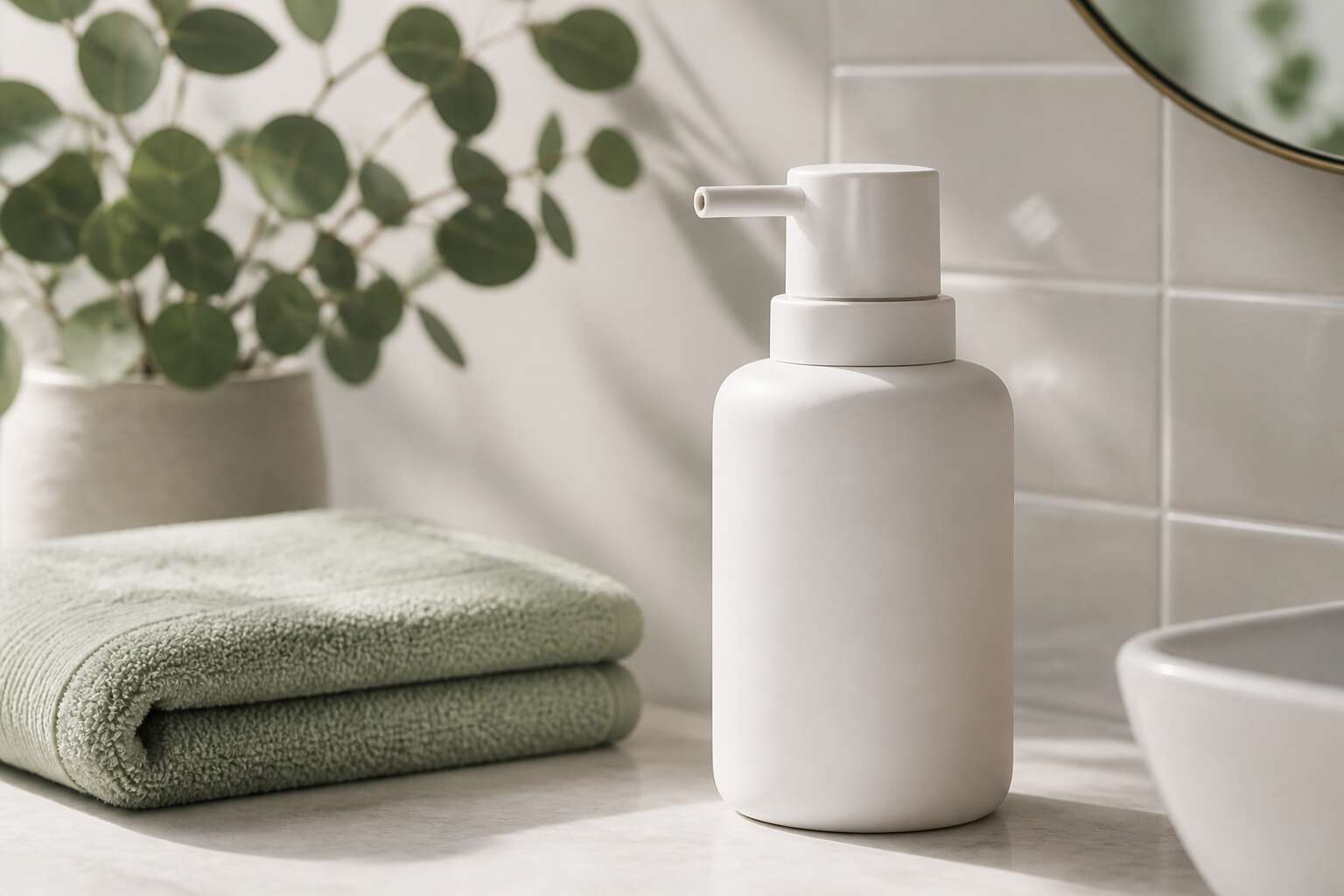
The Role of Soap Dispensers in Modern Home Sanitation
How Touch-Free Dispensers Help Prevent Germ Spread
Every surface in a modern home is a silent witness to transmission. The soap dispenser pep home stands as a practical defense. Touching a pump exposes your clean hands to the same germs you just washed away. This paradox undermines the entire ritual of handwashing.
Touch-free dispensers solve that flaw with cold efficiency. They release soap through an infrared sensor, eliminating direct contact. I have watched families in Johannesburg replace manual pumps with automatic models and notice fewer colds. Consider how a standard dispenser becomes a reservoir:
– Hands deposit microbes on the pump.
– Water and soap residue feed their growth.
– The next user picks up a fresh load.
Automated versions break that chain instantly. A reliable model, with its sensor and sealed cartridge, reduces cross contamination and preserves the quiet health of any household.
Why Liquid Soap Dispensers Are More Hygienic Than Bar Soap
Modern handwashing depends on the vessel as much as the soap itself. A bar resting on a ledge collects dust and moisture. Bacteria find refuge in its softened crevices. Liquid soap from a sealed container avoids that problem. The soap dispenser pep home creates a clean boundary between product and environment.
Every family member touches a bar differently. Oils, dead skin, and microbes accumulate over time. Liquid dispensers release a controlled pour with a single press. No shared surface, no passing of hand germs.
- Bar soap can crack and hold moisture, inviting microbial growth.
- Liquid soap maintains its composition, resisting contamination.
- A pump keeps the remaining soap sealed from bathroom air.
Households with young children or elderly relatives benefit most. Handwashing becomes a measured act, not a communal sharing of residue. Simple design, meaningful consequence.
Using Automatic Dispensers in Bathrooms and Kitchens
Automatic dispensers have changed how we handle sanitation in high traffic zones. The bathroom no longer relies on a shared pump that everyone fumbles with. The kitchen benefits even more, since hands are often wet, sticky, or covered in flour when reaching for soap. A sensor removes that contact point entirely. The soap dispenser pep home model fits neatly into both spaces, offering a measured dose without demanding a firm press or a steady grip.
Consider where a manual pump goes wrong:
- A greasy hand slips right off the button.
- A child pumps five times and floods the sink.
- The nozzle hardens into a crusty mess.
An automatic unit sidesteps these failures quietly. You hold your hand out, the sensor responds, and the soap lands where it should. That small reliability carries real weight in a busy household.
The Environmental Impact of Refillable Dispensers
Liquid soap packaging is a quiet environmental disaster. A standard bottle is mostly water by weight, and its pump mechanism is a tangle of spring, barrel, and nozzle that few South African recycling streams accept. A soap dispenser pep home unit sidesteps this. You keep the fixed dispenser and replenish it with a slim pouch, which uses a fraction of the plastic and ships flat.
- Less packaging per wash by weight.
- Fewer trips to the shop for a whole new bottle.
- No spring mechanism to break and clog the bin.
The sanitation payoff is just as real. A permanent dispenser develops a routine. You know its capacity, and you never wedge a half empty bottle into a crowded cupboard. The refill cartridge also lets you control the soap itself, which matters for households that alternate between medicated wash and something gentle on children’s skin.
Comparing Manual, Automatic, and Foaming Soap Dispensers
Manual Pump Dispensers: Costs and Durability
When you shop for a soap dispenser pep home, comparing manual, automatic, and foaming options starts with your hand. A manual pump delivers a glob with a single press, and its simple mechanism means fewer breakdowns. The cost is pocket change, under a hundred rand, but durability depends on the plastic quality. Cheap models crack around the nozzle within a year. Automatic dispensers remove the touch, yet they demand batteries and motor care, pushing the price higher. Foaming versions squirt a light lather that spreads, which reduces soap used per wash. Consider the repair factor!
Here is the tradeoff at a glance for a soap dispenser pep home:
- Manual: low price, high repairability, some wear
- Automatic: hands free, higher maintenance, sensor failures
- Foaming: economical, needs thin liquid soap
That list captures what most people forget. Choose based on your tolerance for tinkering, not simply the label on the bottle.
Motion Sensor Dispensers: Convenience and Battery Life
Every time you wave your hand under a motion sensor, the dispenser decides. No touching, no waiting. But that decision costs battery power, and battery life is the hidden tradeoff. A unit running on four AA batteries might last three months. Another uses power sparingly for a year. The difference lies in the sensor’s idle current, the silent electricity it drains while you sleep.
For a soap dispenser pep home, this matters most. A soap dispenser pep home with a sensor adds convenience, but foam formulas spread further, so refills last longer. If the batteries die mid-week, you scrub with nothing. The idle current determines whether you wake to a working pump or a silent block.
- Check the sensor’s standby draw before buying
- Choose units with USB power backup
- Read the battery count, not the marketing claims
That list separates a dependable unit from an early morning failure.
Foaming Soap Dispensers: Less Waste, More Coverage
When you compare manual, automatic, and foaming soap dispensers, the real difference isn’t in the pump. It’s in how much soap actually reaches your hands. A manual pump delivers a thick blob that often slides off. An automatic sensor avoids touch but still dispenses the same liquid. A foaming soap dispenser pep home aerates the soap, creating a lighter lather that spreads further across your skin.
Foaming soap uses about a third less liquid per wash, yet the foam covers more surface area. That means less waste and fewer refills. For households, this changes the economics of hygiene. Here is a quick comparison:
- Manual: precise but messy
- Automatic: convenient but uses standard liquid
- Foaming: efficient coverage with less product
The tradeoff is that foaming dispensers often require specific soap formulations. But for a soap dispenser pep home, the reduced consumption outweighs the extra refill care.
Wall-Mounted vs. Countertop Designs
Counter space is prime real estate in a South African bathroom. Wall-mounted units free that space but lock you into a fixed position. Countertop models offer flexibility, yet they crowd the basin. The choice between manual, automatic, and foaming dispensers changes with each mounting style.
A manual pump works best on a countertop. You need a stable base to press against. Wall-mounted manual dispensers exist, but they force an awkward wrist angle. Automatic units shine on the wall. A sensor doesn’t need pressure, so a fixed spot works fine. Foaming dispensers suit both. The lighter pump action works even when mounted.
For a soap dispenser pep home, consider who uses it. Children reach a countertop easily. Tall adults prefer a wall mount at chest height. Refill access matters too. Countertop bottles simply unscrew. Wall-mounted refills often require a clip or a twist.
Consider the tradeoffs:
- Wall-mounted: saves space, fixed height
- Countertop: portable, easier to maintain
Choose a soap dispenser pep home based on your layout and the pump type.
Essential Features to Consider When Buying a Dispenser for Your Home
Capacity and Refill Frequency
Most households refill their dispensers every two to three weeks, yet the average container holds only 250 millilitres of liquid. That mismatch leads to frequent topping up at inconvenient moments. A soap dispenser pep home should match your household’s actual usage.
A 500 millilitre reservoir lasts a family of four roughly a month with regular handwashing. Larger capacities suit busy kitchens or shared bathrooms, while smaller units work well in guest toilets. Refill frequency also depends on soap thickness; thicker liquids cling to the pump and dispense slower, while foaming soaps use less product per pump.
Every refill invites spillage, so choose a container you can live with. Transparent reservoirs let you see levels at a glance, and wide openings make topping up simple. The right capacity for your soap dispenser pep home reduces how often you reach for the bottle and keeps the soap flowing when you need it.
Material Quality: Plastic, Glass, or Stainless Steel
A dispenser’s material determines how it feels, how long it lasts, and how it survives a South African bathroom’s humidity. Plastic units are light and affordable, but the constant contact with essential oils can turn them cloudy. Glass offers a clean look and never reacts with soap, yet it demands a steady hand in a busy kitchen. Stainless steel resists corrosion and feels substantial, making it the workhorse for high-traffic areas.
Think about where the dispenser will live before you commit.
- Plastic: budget friendly and easy to replace, but less durable over time.
- Glass: elegant and inert, yet fragile around sinks.
- Stainless steel: robust, hygienic, and the strongest match for a soap dispenser pep home.
Maintenance matters too. A brushed steel surface hides fingerprints better than a glossy one, and a wide mouth on any material simplifies refills.
Compatibility with Different Soap Types
Of course, the soap itself is a picky guest. Some luxurious hand washes arrive with the consistency of honey, while others are as thin as water. Your soap dispenser pep home must consent to serve whichever potion you favour. A pump that struggles with a thick gel will eventually sputter and clog. Meanwhile, a cheap, wobbly pump can flood your basin with an unforeseen torrent of liquid detergent.
The internal tube, often overlooked, governs this relationship. For thick, creamy soaps, you need a mechanism with a wide bore and a stout spring to draw the liquid upwards. For thinner, runny solutions, a restrictive valve is preferable to prevent a constant drip. A mismatch here creates an messy ceramic countertop.
Consider these points when matching your soap to your dispenser:
– The pump’s resistance. A heavy-duty spring suits viscous gels.
– The dip tube’s length. It should reach deep into the reservoir.
– The nozzle design. A non-drip nozzle is vital for thinner liquids.
Kitchen dishwashing liquid is a different beast entirely. It is inherently a degreaser, often more acidic than hand soap. A stainless steel pump head will tolerate this without corrosion, whereas a flimsy plated plastic one will soon flake. The same holds true for antibacterial blends, which can contain harsh actives. The right soap dispenser pep home should remain indifferent to the chemical personality of its contents. To pair a fragile vessel with a caustic liquid is asking for a short-lived partnership. You want a dispenser that delivers the required amount with a crisp, satisfying “snick,” regardless of the potion inside. That is the true mark of compatibility.
Ease of Cleaning and Maintenance
The soap dispenser pep home owners select often reveals its character during cleanup. A removable pump and a wide mouth opening turn this chore into a simple task. Internal ridges trap slime, so choose straight sided reservoirs that you can reach with a cloth. The pump mechanism should unscrew fully, exposing the dip tube for a thorough rinse.
When evaluating maintenance, check for:
- Fully detachable pump components
- Smooth interior walls without seams
- A matte finish that hides water spots
A matte finish hides fingerprints; a glossy one demands constant wiping. Avoid harsh scrubbers, as they scratch the surface and create invisible havens for bacteria. Dishwashers damage most pumps, so hand washing remains the standard. The soap dispenser pep home that lasts for years is the one you can clean in under a minute, without a second thought.
Aesthetic Design and Kitchen/Bathroom Decor
A soap dispenser pep home should read as part of the room, never as an afterthought. In a kitchen with brass fixtures and oak shelving, a glass reservoir with a brushed pump echoes that warmth. In a bathroom with matte tiles and low lighting, a ceramic body in cream or sage blends without disappearing.
Three visual cues guide the eye:
- Proportion, so the dispenser neither crowds a narrow basin nor gets lost beside a deep sink.
- Colour, pulled from the undertones of your tiles, cabinetry, or countertops.
- Finish, matching the pump metal to your tapware for a gathered look.
The right dispenser earns its place quietly, settling into daily rhythm without demanding notice. Observe the room first, and the soap dispenser pep home will follow.
How to Install and Maintain a Soap Dispenser for Long-Term Use
Step-by-Step Guide to Filling and Priming
Almost every pump failure I have dealt with traces back to a dried film of soap lodging in the inner spring. That makes filling and priming the central task in caring for a soap dispenser pep home. When mounting the unit, keep the pump head upright, then work through this order:
- Remove the pump head and rinse the dip tube with warm water.
- Shake out the moisture and check the rubber gasket for cracks.
- Fill the reservoir only three-quarters full to leave room for air.
- Press the pump slowly five or six times until soap flows without air pockets.
A thick liquid soap can gum up the mechanism, so dilute it with a splash of water before the first prime. Once the pump draws steadily, the dispenser is ready. Wipe the exterior after every refill, and the unit will stay responsive for years.
Troubleshooting Clogs and Drips
Nearly80% of common household soap dispenser failures are not the result of manufacturing defects, but rather the slow accumulation of dried soap residue and mineral scale. These deposits build silently inside the pump chamber and dip tube, turning a smooth action into a gritty, uneven draw. For a soap dispenser pep home, this is the primary adversary. The initial prime will not save you from this inevitable clogging, as the narrow channels are easily obstructed by the very material they are designed to move.
When a dispenser begins to sputter or deliver a weak stream, the problem is often a partial obstruction that has calcified over time. Consider the common culprits:
1. Soap residue that has dried into a crystalline film on the internal spring.
2. Hard water minerals that have bonded with the soap to form a scale.
3. A kinked or bent dip tube that restricts the flow despite a full reservoir.
A persistent drip from the nozzle usually indicates a loss of pressure in the pump chamber, often caused by a worn gasket or a slight crack in the plastic housing. Inspecting these components upon disassembly is more effective than repeatedly forcing the pump, which can warp the internal seals. For a soap dispenser pep home, the maintenance ritual involves more than just wiping the exterior. It requires a deliberate check of the rubber valves and the spring’s tension to ensure the mechanism retains its integrity over time. Addressing the viscosity of the soap itself is also crucial, as a thick gel can adhere to the pump wall and create a vacuum lock that no amount of pressing will resolve.
Cleaning Tips to Prevent Soap Residue
Installing a soap dispenser pep home correctly begins with aligning the pump stem vertically. A tilted installation forces the dip tube against the reservoir wall, creating uneven suction. Secure the mounting nut firmly, but avoid overtightening the plastic threads.
For a soap dispenser pep home, the long term use depends on the cleaning routine. Wipe the nozzle weekly with a damp cloth to remove sticky film before it hardens. Every month, flush the pump by dispensing warm water through the system. This simple act dissolves residue that would otherwise calcify. Focus your attention on the internal parts that gather the most buildup:
- The spring cavity where soap crystallizes
- The rubber gasket that seals the pump chamber
- The dip tube opening at the base
Keeping these areas free of residue ensures a consistent draw and extends the mechanism’s lifespan.
When to Replace the Pump Mechanism
For a soap dispenser pep home, the pump mechanism is the first component to fail, not the bottle or nozzle. After extended use, the spring loses its tension, and the rubber gasket hardens, causing a sluggish draw. You press the pump once and nothing happens, then twice and a thin stream sputters out. That delay marks the moment for replacement.
Inspect the pump stem for hairline cracks and the dip tube for warping. These defects compromise suction and allow air to enter the chamber. Fortunately, replacing a pump is straightforward.
- Empty the reservoir completely.
- Unscrew the collar from the bottle neck.
- Pull the old pump assembly out.
- Insert the new unit and tighten the collar.
When installing the replacement, align the stem vertically and secure it firmly. A soap dispenser pep home will last years if you swap the pump before it corrodes, saving you from buying a whole new unit.
Extending the Life of Your Dispenser
One plumber told me that most soap dispensers die from loose collars, not broken springs. In South African homes, where humidity and hard water are common, a soap dispenser pep home needs deliberate installation. Set the base on a dry surface, then hand-tighten the collar until you feel resistance. Overtightening strips the threads.
Monthly checks extend the life of any dispenser. Look for movement in the pump head and tighten the collar if needed. Here is a practical checklist:
- Check the base seal for gaps.
- Press the pump fully to keep the spring active.
- Set the dispenser on a level surface to prevent tipping.
These steps keep the internal mechanics moving freely. Over time, you will notice the plunger action stays smooth. A well-maintained soap dispenser pep home reduces waste and saves money, making it a small but worthwhile part of your daily routine.
Frequently Asked Questions About Home Soap Dispensers
Can I Use Hand Soap in a Dish Soap Dispenser?
Most South African kitchens have a soap dispenser pep home, yet few owners stop to ask what the pump actually handles. The short answer is yes, hand soap works in a dish soap dispenser, but the pump may not thank you!
Hand soap uses thickeners and moisturisers. Dish soap relies on degreasers. Swap them and the thicker hand soap leaves residue inside the nozzle, which hardens and causes drips. Dish soap in a hand pump cleans your hands, but strips natural oils faster. I have seen pumps fail this way.
The main differences:
- Hand soap is pH balanced for skin.
- Dish soap targets grease and food residue.
- Hand soap includes antibacterial agents.
Your soap dispenser pep home handles both liquids, but the mechanism responds differently to each. Hand soap residue accumulates, while dish soap keeps the nozzle cleaner.
How Do I Adjust the Amount of Soap Dispensed?
Most people never touch the adjustment ring on their soap dispenser pep home, then wonder why they burn through a bottle each month. The pump mechanism controls dosage through its stroke length, which you can modify on many models. Look for a rotating collar under the nozzle. Turning it clockwise shortens the stroke, producing a smaller squirt. Counterclockwise gives a generous lather.
Some pumps use a twist-lock top. Rotate the entire top piece to change how far the piston travels. For models with a dip tube, move the tube closer to the pump head to reduce the amount drawn.
Common adjustment methods:
- Rotating collar under the nozzle
- Twist-lock top assembly
- Repositionable dip tube
- Internal flow restrictor screw
Test your soap dispenser pep home after each change. A quick pump tells you if the dose fits.
Are Automatic Dispensers Worth the Extra Cost?
Automatic dispensers arrive with a promise: touchless hygiene, measured doses, and a quiet elegance. Yet their price tells a different story. For any soap dispenser pep home, the question is whether that premium translates into real value. Manual pumps have a mechanical simplicity, a predictable rhythm. Automatics depend on batteries, sensors, and proprietary cartridges. In a South African household, power outages add another layer. For a soap dispenser pep home,these factors define the worth of automation. Consider what you truly need:
- Maintenance complexity and replacement parts
- Refill costs over a year
- Sensitivity to thick soaps or foam formulas
Many users, I among them, find the automatic’s convenience fades after the first month. The pump’s stroke will never ask for a battery! But if your household prioritizes no-touch operation,the extra cost becomes a necessary ritual; for others, it is a cost that brings no return.
Which Soap Type Is Best for Foaming Dispensers?
Foaming dispensers are selective. They demand thin, low-viscosity soaps that aerate easily. Standard liquid hand soap packs too much viscosity and will clog the pump. Specially formulated foaming soap, or a diluted mix of one part liquid soap to four parts water, is the practical answer.
- Foaming soap concentrates designed for dilution
- Thin liquid soaps labelled for foaming pumps
- A homemade blend of liquid soap and water
South African water hardness varies wildly by region, and it changes how the foam forms. A soap dispenser pep home in a hard-water area may need more dilution to keep the foam consistent. The soap type and the water chemistry work together. Ignore either one and you get a watery mess or a pump that gives up entirely.
How to Remove Rust and Mineral Deposits from a Dispenser
Water hardness in South Africa is not uniform, and your dispenser knows it. Mineral deposits form a white crust around the nozzle. Rust attacks the metal spring inside the pump. Both issues reduce flow and eventually kill the mechanism.
To remove mineral deposits, soak the nozzle in white vinegar overnight. For heavy crust, mix vinegar with warm water at a 50/50 ratio. Never use bleach on a soap dispenser pep home. Bleach corrodes metal and weakens plastic.
For rust, the approach is different:
– Pull the pump mechanism out completely
– Scrub with a soft brush and citric acid paste
– Rinse thoroughly and dry before reassembling
This method restores the pump without replacing the whole unit. Weekly vinegar rinses stop the buildup from returning. I have also found that wiping the nozzle after each use makes a noticeable difference. That simple habit protects a soap dispenser pep home from the worst of what hard water sends its way.




0 Comments