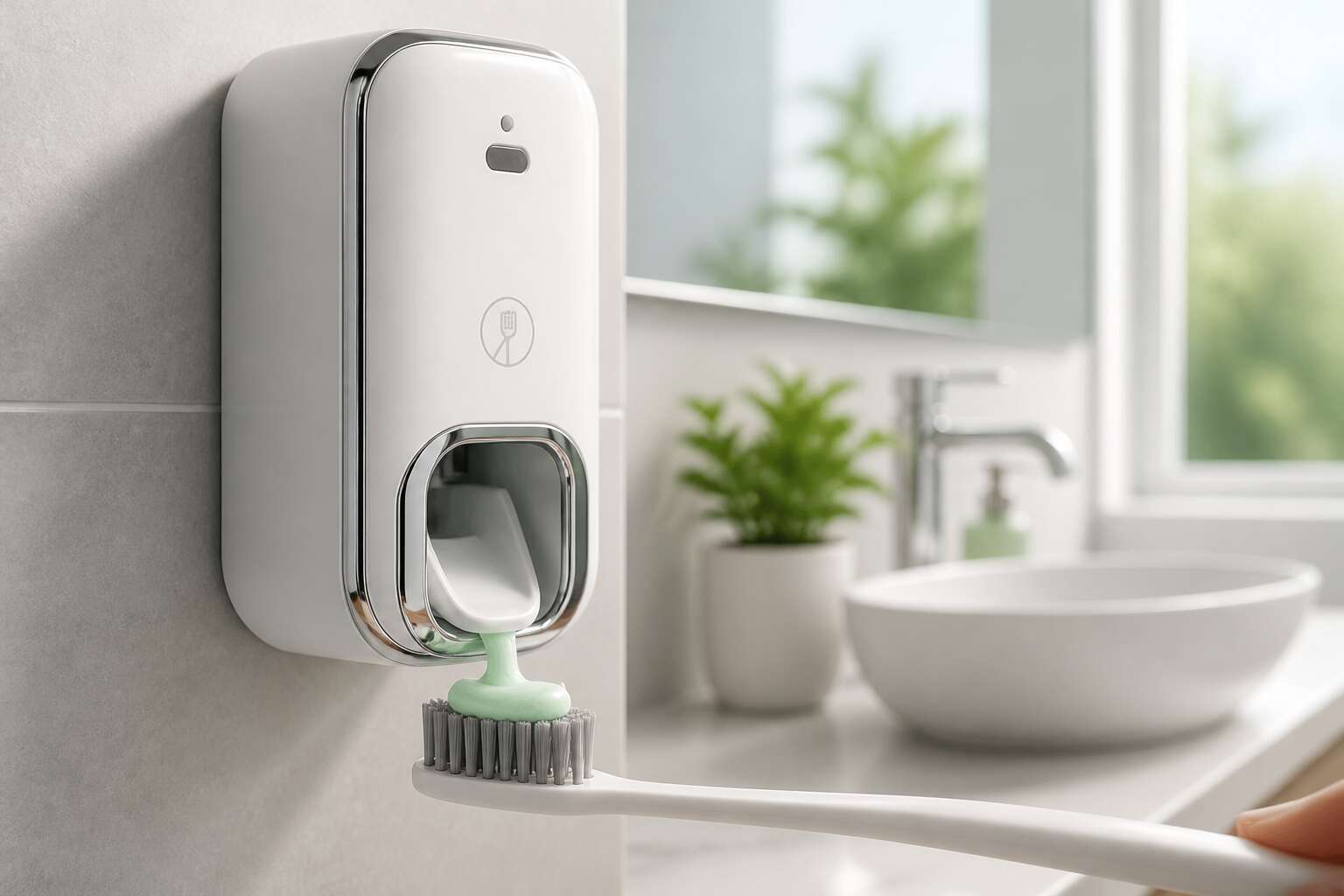
Why Switch to a Toothpaste Dispenser
The Hygiene Advantage of Pump Dispensers
Most people ignore the bacterial film forming on tube caps. That moist crevice becomes a tiny ecosystem. A toothpaste in dispenser removes that problem entirely. Pump dispensers deliver paste without touching the nozzle tip to your toothbrush. Your brush never dips into shared product. For families, this matters enormously. Consider what accumulates near a squeezed tube mouth.
Hygiene advantages come from one simple shift:
- No paste backflow into the tube
- Clean dosage every morning
- Reduced contact with bathroom germs
Each pump pushes fresh paste upward. The seal stays intact. You get measurable control. In South African bathrooms, humid conditions amplify contamination risks. That’s why I switched my household to pumps. The difference is tangible. A toothpaste in dispenser is ordinary until you try it. Then the old tube feels indecent.
Reducing Toothpaste Waste and Mess
About 10% of every toothpaste tube never reaches a brush. It hardens inside the crimped end, unreachable and forgotten. A toothpaste in dispenser removes that loss entirely. The pump mechanism draws from the cartridge bottom, moving the viscous paste upward. You press once. A clean ribbon appears. No folds. No uncapped tubes. No crusted nozzles. Every gram gets used!
My bathroom counter once carried dried smears from half-closed caps. The switch solved that too. The unit stays upright. Paste never leaks sideways. The basin rinses clean in seconds.
Waste comes from predictable places:
- Residual paste hardened in the crimped end of every squeezed tube
- Oversqueezed globs that land on the brush handle or the basin
- Cracked caps that let air thicken the paste inside
Convenience for Families and Kids
In a house with three kids, the bathroom is a negotiation zone. The younger two cannot open a toothpaste tube properly. The oldest squeezes from the middle, leaving the tube misshapen and the paste half dried. A toothpaste in dispenser removes these small battles entirely.
The pump requires one simple press. A child’s hand can reach it, manage it, and get the right amount without adult supervision. I watched my youngest master it in one morning. Consider the advantages:
- No cap to unscrew or lose
- No squeezing pressure to judge
- No paste pushed out the side of the tube
Each child presses once, brushes, and leaves the counter clean. You save minutes every morning, and those minutes matter when the school bell rings at 7:20!
Types of Toothpaste Dispensers on the Market
Wall-Mounted Dispensers for Bathroom Organization
Wall-mounted toothpaste dispensers are the introverts of the bathroom, clinging to tiles and minding their own business. They free up counter space for the fancy soap nobody uses. Mounting methods vary, from industrial strength adhesive to suction cups with a tragic sense of loyalty. In South African bathrooms with high humidity, adhesive versions often outlast their suction cup rivals.
Some models include a built-in toothbrush holder. Others offer a clear window so you can see exactly how much toothpaste remains. The best part? A wall mounted dispenser puts the toothpaste in dispenser at eye level. This makes brushing feel less like a chore and more like a small victory against clutter.
Consider placement carefully before sticking anything permanently, because removing a stubborn adhesive base from tiles is a weekend project nobody signs up for. That singular toothpaste in dispenser might become the most reliable member of your morning routine.
Countertop Stand Dispensers with Refillable Cartridges
Countertop stand dispensers with refillable cartridges offer a stable base for daily use. Their weighted design keeps the pump upright on uneven surfaces. The cartridge detaches easily, which simplifies cleaning and allows a switch between paste formulas without discarding the entire unit.
- Transparent cartridges show paste levels at a glance.
- Weighted bases resist accidental knocks.
- Some models include a silicone spatula for the final squeeze.
This arrangement puts your toothpaste in dispenser form without requiring wall fixtures. Many South African households favour these models because they travel well between bathrooms. Renters and students benefit from a device that leaves no trace when moving out.
Automatic Sensor Dispensers for Touch-Free Use
Watch anyone handle a slippery toothpaste tube after a shower and the case for touch free tech becomes obvious! An automatic sensor dispenser uses infrared detection to release a set amount of toothpaste in dispenser form directly onto the bristles. No pressing. No pumping. No sticky residue on the packaging.
The device runs on batteries, so it stays functional during load shedding. Sealed internals resist the humidity common in South African bathrooms. The motor engages only when the sensor is tripped, preserving battery life and paste. The sensor reads distance, not touch, which means everyone in the household gets a clean portion without sharing a nozzle.
What to look for when choosing among these models:
- Adjustable portion settings for children and adults.
- Clear paste windows show how much toothpaste in dispenser remains.
- Removable heads that can be rinsed under a tap.
Travel-Friendly Mini Dispensers
Travel friendly mini dispensers are the unsung heroes of the suitcase. They slip into a toilet bag without drama, and they keep your toothpaste in dispenser form for the whole week. Most hold 30 to 50 ml, which is enough for a short trip. A locking lid is essential. Nobody wants a surprise paste eruption inside a backpack.
Some models use refillable pouches, so you can top up from the family bathroom instead of buying a new unit every holiday. Check airline liquid limits before packing. Also look for a one handed button rather than a twist cap, because airport queues punish fiddly closures.
Smart Dispensers with Built-in Timers
Brushing for two minutes is the gold standard, yet most people stop at 45 seconds. Smart dispensers with built-in timers solve this problem directly. They measure exactly how long you brush, then signal when the session is complete. A toothpaste in dispenser like this removes guesswork. It suits adults and children alike. The timer resets automatically for each use.
- A visible ring that changes color.
- A gentle vibration at the 30 second mark.
- A memory setting for multiple users.
These aids are not gimmicks. They train muscle memory. In a busy South African household, a smart dispenser turns a rushed routine into a disciplined habit. The result is better oral care without extra effort.
How to Properly Refill and Maintain Your Dispenser
Step-by-Step Guide to Refilling a Dispenser
Refilling a toothpaste in dispenser looks simple until you cross thread the cap or trap air in the tube. The process rewards patience:
- Remove the empty cartridge and wipe the nozzle with alcohol.
- Inspect the rubber gasket for cracks.
- Align the new refill pack’s opening with the pump base and press firmly until it clicks.
- Pump once or twice to prime the flow.
Maintenance follows a similar rhythm. Flush the nozzle weekly with warm water to prevent dried paste from clogging the mechanism. Wipe the exterior with a damp cloth, never abrasive scrubbers. Every month, remove the pump head and soak it in vinegar for ten minutes to dissolve mineral deposits.
A properly maintained unit keeps the toothpaste in dispenser functioning without surprises.
Cleaning and Sanitizing Tips to Prevent Bacteria Build-Up
The space between your sink and mirror holds more unseen life than a compost heap. A toothbrush holder can host millions of bacteria per square centimetre, while a sealed toothpaste in dispenser removes that hidden reservoir entirely. Refilling it properly demands patience, not brute force. Wipe the nozzle with alcohol, inspect the rubber gasket, and press the new cartridge until it clicks. That click signals a sealed union.
Maintenance is where most units fail. Dried paste crusts inside the pump, and minerals from hard water, common in Gauteng’s borehole areas, wreak silent havoc. Every week, flush the nozzle with warm water. Every month, remove the pump head and give it a vinegar bath for ten minutes.
- Soak once monthly to dissolve calcium deposits.
- Dry all parts fully before reassembly.
- Never use abrasive scrubbers; they scratch the surface and invite biofilm.
These steps keep your toothpaste in dispenser honest, delivering paste without surprise or stagnation. In a humid Durban bathroom or a dry Karoo winter, the same ritual applies.
Choosing the Right Toothpaste Consistency for Dispensers
The viscosity of your paste dictates the lifecycle of a toothpaste in dispenser. I find that most failures originate not from the pump, but from a formulation mismatch. A runny gel slips past the piston and crystallizes in the spring, while heavy-duty whitening pastes with high silica content act as a slow abrasive on the internal valve housing.
Choosing a smooth, homogeneous gel or a low-abrasion paste reduces the strain on the gear mechanism.
- Opt for a low-viscosity gel over a dense, clay-like paste.
- Avoid formulas with visible speckles or granules.
- Prioritize sodium bicarbonate or silica-free blends for sensitive mechanisms.
The refill procedure becomes effortless when the paste matches the pump’s tolerance. A clean cartridge swap is impossible if the product has settled into a hardened mass during storage. Shake the refill cartridge before insertion to re-suspend the liquid phase. This habit prevents airlocks inside the check valve, keeping your toothpaste in dispenser operating without vigorous priming.
Troubleshooting Common Clogging and Leakage Issues
I have seen a toothpaste in dispenser survive years of faithful use, only to be undone by a careless refill. Before you swap the cartridge, run your thumb along the pump head to check for residual paste. A hardened crust there will invite leaks within days.
Clogging is rarely the paste itself. It is the air trapped behind it. After inserting a new cartridge, hold the unit upside down and tap it twice. Then pump slowly. If the flow stutters, do not force it! Remove the nozzle and rinse it under hot water. For persistent issues, check the following:
- Inspect the silicone valve for tears.
- Confirm the cartridge neck is free of plastic shavings.
- Ensure the pump spring sits evenly within its housing.
Leakage usually means the seal has worn out. A few turns of PTFE tape around the cartridge thread will buy you time, but a replacement is the proper fix.
Key Features to Consider When Buying a Toothpaste Dispenser
Material Durability: ABS Plastic vs Stainless Steel
Most toothpaste in dispenser units fail long before the pump gives out. The housing material is the true determinant. ABS plastic is lightweight and affordable, but it turns brittle after months of humid exposure. Stainless steel, especially 304 grade, endures South African bathroom conditions without losing its integrity.
Material choice alters the entire ownership experience:
- ABS plastic resists fluoride damage but develops hairline cracks in coastal humidity
- Stainless steel handles temperature swings and hard water spray without surface decay
- Steel housings protect the internal piston assembly from physical impact
A steel-bodied toothpaste in dispenser absorbs the daily punishment of a shared family bathroom. An ABS unit might survive a low-traffic guest bathroom, yet crevices appear where the cartridge locks into place. Durability determines lifespan. It is the difference between a dispenser that lasts two years and one that lasts a decade.
Mounting Options and Valve Mechanisms
Ever watched a dispenser dribble toothpaste down the wall because its mounting bracket wobbled? The mounting system and valve mechanism determine whether a toothpaste in dispenser feels solid or flimsy after six months of daily use.
Mounting options come down to three basic approaches:
- Screw plates into tile or wood
- Adhesive strips for rental flats
- Suction cups for quick repositioning
Screw plates handle a shared family bathroom without shifting. Adhesive strips work if the wall is perfectly smooth. Suction cups fail when moisture creeps behind the rubber, a common issue in coastal South African homes. Valve mechanisms matter equally. A spring-loaded piston seals the nozzle after each pump, stopping air from drying the paste inside. Ball valves are cheaper but leak after a few months. I prefer a silicone valve paired with a steel housing.
Portion Control and Pump Sizes
Portion control decides whether a toothpaste in dispenser becomes a frugal household tool or a source of frustration. A standard pump releases roughly one gram per stroke, which aligns with the recommended amount for adults. Some models offer half pumps for children, while others let you adjust the stroke length by turning the nozzle.
Pump sizes range from compact 50 ml reservoirs to bulk 250 ml cartridges. Smaller pumps fit travel kits and single bathrooms, but require frequent refills. Larger systems reduce reorder frequency, yet may waste paste if the dosage exceeds what your family actually uses.
- 0.5 g per pump suits toddlers and light users.
- 1 g per pump matches adult brushing requirements.
- 2 g per pump serves heavy users or shared basins.
Actuation force varies widely between models, and a stiff plunger often leads to overpressing and messy output.
Compatibility with Different Toothpaste Brands and Tubes
One tube design difference can ruin a toothpaste in dispenser system. South African shelves hold everything from squat, wide tubes to tall, narrow ones. That variance matters more than most buyers expect!
The pump mechanism is the deciding factor. Most dispensers use rollers that grip the tube and squeeze from the base. If the tube is too thick or too thin, the rollers slip or jam entirely.
Consider these compatibility factors:
– Tube neck diameter: standard necks fit most mechanisms, but some premium brands use wider collars
– Tube wall material: flexible laminate compresses cleanly; rigid plastic resists the rollers
– Refill format: cartridge-based systems skip the tube problem altogether
A toothpaste in dispenser that accepts multiple brands prevents lock-in. I have found that maximum tube dimensions listed in millimetres beat any brand list. That number stays useful even when brands redesign their packaging.
Ease of Cleaning and Dishwasher Safety
Forgetting to rinse a toothpaste in dispenser for one week can leave behind a chalky crust that ordinary wiping will not remove! The tricky part is that the pump housing and the tube sleeve collect different amounts of residue. A model with a pull-apart body works well, but only if every seam can tolerate a dishwasher cycle. Some manufacturers stamp the base with a dishwasher-safe logo yet still recommend hand washing for the valve assembly. That contradiction deserves attention before purchase.
You can test a toothpaste in dispenser’s cleaning design by looking for these details:
- A removable check valve that springs out without tools
- A nozzle that splits into two halves for access to the internal channel
- A tube sleeve that detaches from the pump motor or rotating gear
Each part should survive 50+ cycles without losing its fit. If the plastic starts to cloud or the spring tension weakens, the dispenser will start leaking. That is why I prefer models where the cleaning mechanism is obvious, not hidden behind snap-fit panels.
Price Range and Warranty Expectations
A toothpaste in dispenser can cost anywhere from R50 to R500, but that price gap hides critical differences in warranty coverage. The cheapest units often arrive with only a 30 day guarantee, while premium models carry three year warranties. I once bought a mid range pump that failed at month four. The manufacturer replaced it because the warranty explicitly covered the valve mechanism.
- Check if the warranty covers internal parts.
- Confirm the replacement policy for cosmetic damage.
- Look for local South African distributors.
Price alone rarely predicts durability. Some budget dispensers use weaker springs that loosen within weeks. Expect to pay more for a sealed motor and a robust pump head. A solid warranty should match the expected lifespan of a toothpaste in dispenser. Read the fine print for exclusions on toothpaste residue or hard water damage.
Environmental Impact and Sustainability of Toothpaste Dispensers
Reducing Plastic Waste Through Refillable Systems
Every year, billions of toothpaste tubes end up in landfills, their multilayered plastic impossible to recycle. A toothpaste in dispenser with a refillable system changes that calculus. Instead of discarding a new tube each month, you replace only the inner cartridge, cutting plastic waste by up to 70 percent in some designs.
Refillable systems use durable pumps and lightweight refill pouches. These pouches require less material and energy to produce. I have seen bathrooms where one dispenser lasts for years, with only the small refill needing disposal. This shift matters in South Africa, where municipal recycling often struggles with composite materials.
- Refill pouches use up to 80 percent less plastic than standard tubes.
- Dispenser bodies are designed for repeated use, not single cycle.
The result is a tangible reduction in environmental burden. A toothpaste in dispenser encourages mindful consumption, and the refill ecosystem grows each year.
Eco-Friendly Materials and Bamboo Options
Every plastic pump body holds a hidden environmental debt. A toothpaste in dispenser made from bamboo offsets that burden. Bamboo grows rapidly, pulling carbon from the air, and when the dispenser finally wears out, the body can return to soil. The metal internals need removal first. South African recycling programs rarely accept composite materials, so this simplicity matters. I have tested bamboo dispensers that felt sturdy and reliable. They require less energy to produce than ABS or stainless steel alternatives.
- Bamboo sequesters carbon during its growth phase.
- The durable pump base serves for years, with only refill pouches discarded.
- Natural oils and water-based finishes keep the material safe.
Choosing a toothpaste in dispenser with a bamboo exterior means embracing minor variations in grain and texture. Those variations indicate a living material, not a factory mould.
Dispensing Every Last Drop: Less Product Waste
It is a quiet tragedy of the bathroom shelf: the tube that yields its last ribbon of toothpaste with a desperate squeeze, only for the user to toss it away with a tenth of the contents still clinging to the walls. That waste multiplies across millions of households. A toothpaste in dispenser sidesteps this loss entirely. The pump mechanism forces the paste upward with consistent pressure, so the product slides down the chamber walls until the very last gram exits the nozzle.
For South African consumers, this matters on both cost and resource fronts. Every unused dollop inside a discarded tube represents wasted money and wasted material. With a dispenser, the refill pouch is designed to be emptied completely, leaving behind only a thin film of residue. This translates directly to less product waste, and a household that embraces a toothpaste in dispenser may refill less often.



0 Comments