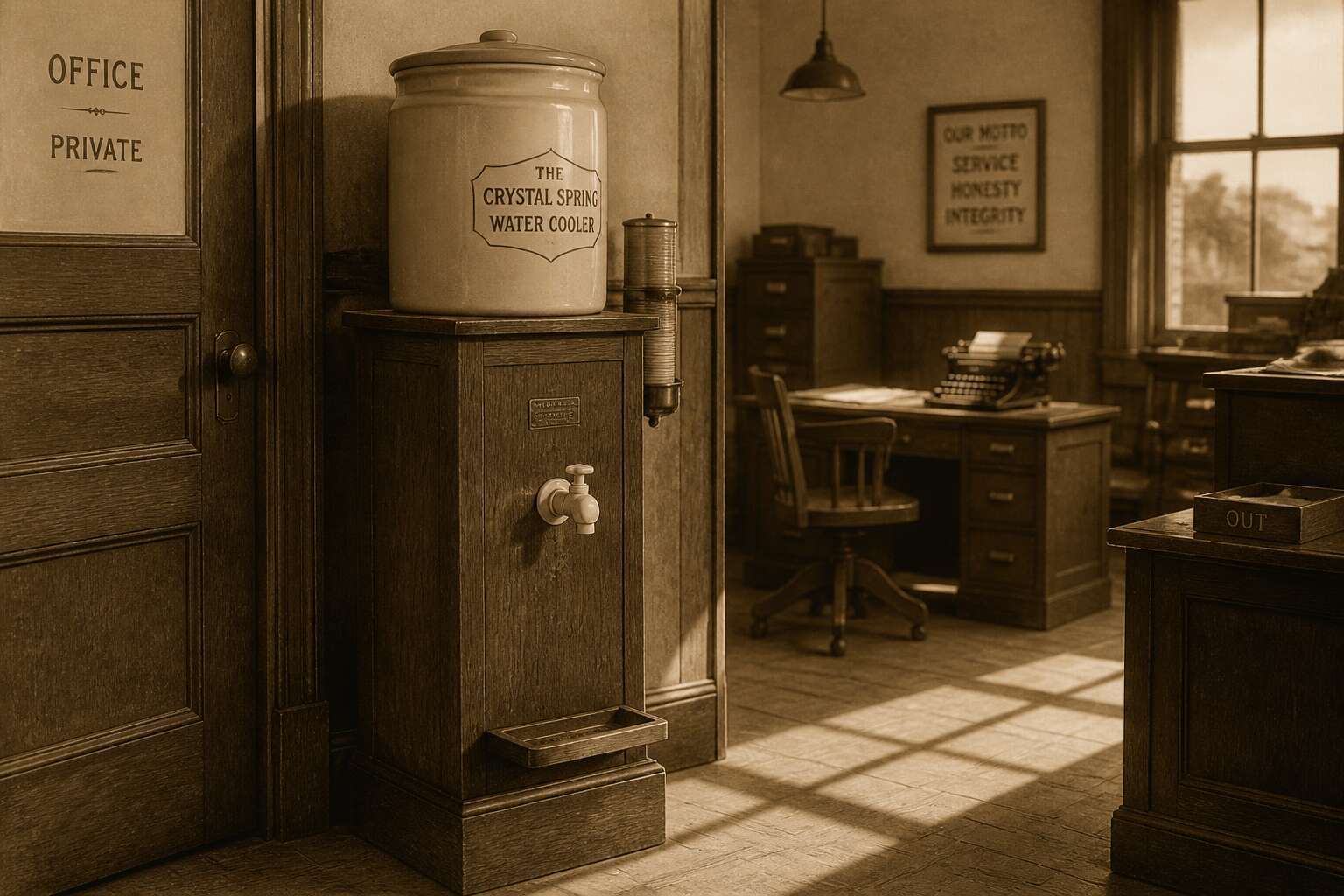
The Origins of Water Dispensing
Ancient Water Storage and Distribution Methods
The oldest copper pipes date to ancient Egypt. But before plumbing, water moved by hand. Animal skins, hollowed gourds, and clay pots were the first portable storage. They kept water clean and cool.
Communal distribution followed. Rome’s aqueducts carried spring water into cities. Public fountains were central to daily life. People filled their own jugs at each spout.
Asking who invented water dispensers means tracing this thread. The modern machine adds cooling and filtration, but the core idea is ancient. A clean, controlled source of drinking water, available whenever you need it.
The Emergence of Public Fountains
Public water points were not a single invention, but a gradual refinement of hydraulic control. The true origin of water dispensing lies in the valve, the simple mechanism that turns flow on and off. While the Romans popularised the network, earlier civilisations in Crete and the Indus Valley used stone spouts that directed water into basins, creating a metered, accessible source. These spouts were the first recognisable dispensers, designed for communal use rather than private storage.
The emergence of public fountains as civic architecture changed the relationship between people and water. A fountain was no longer just a source; it was a performance of engineering and social order. In medieval towns, the public fountain became the heart of the square, often fed by gravity from a distant spring. Consider the key elements that defined these early dispensers:
– A fixed spout or pipe to direct the water
– A basin to catch and hold the flow
– A drainage channel to prevent stagnation
These components remain in modern machines, albeit with cooling and filtration. So, when exploring who invented water dispensers, look to the anonymous engineers who solved the problem of controlled, public access. Their legacy is the tap on your sink and the chilled unit in your office.
Early Mechanical Designs and Patents
Most people assume the office water cooler appeared fully formed in the mid-20th century. It did not! Patents for mechanical water dispensers date back to the 1880s. The question of who invented water dispensers therefore has a paper trail. Luther Haws, a San Francisco plumber, filed a 1909 patent for a drinking fountain with an angled jet and a guarded nozzle. His aim was to stop cross-contamination in public schools. That valve design became the standard for wall-mounted fountains. Meanwhile, bottled water coolers evolved from the dairy and soda industries, which needed airtight spigots and vented jugs.
The early patents share a few mechanical elements:
- A spring-loaded valve that closes automatically
- A recessed basin to contain splashback
- A metered release or continuous flow mechanism
These filings settled the legal boundaries around dispensing technology. The chilled unit in your office comes directly from those original claims.
Urbanization and the Need for Safe Drinking Water
Cities in the late 1800s expanded beyond their water infrastructure. Tenements packed families into rooms with no running water, so people hauled buckets from street taps shared by entire blocks. That water often travelled from contaminated sources, and typhoid became an urban fact of life. The question of who invented water dispensers matters in this context because cities needed controlled points of access:
- Spigots that sealed completely to prevent leaks.
- Valves positioned so hands never touched the outlet.
- Basins shaped to catch splashback.
Town councils demanded these features. School boards specified them in tender documents. What strikes me, reading the old council records, is how precise these demands were. The device we now call a water cooler was not a luxury item. It was public health infrastructure before it became an office convenience, and its early engineers answered to municipal inspectors first.
Key Inventors and Groundbreaking Patents
Halsey Taylor and the Modern Drinking Fountain
Ask most people who invented water dispensers and you will get a confident guess involving a Victorian plumber. They are half right. Halsey Taylor was the man, though his motivation was grief, not pipe wrenches. In 1912, after his father died from typhoid fever traced to a shared public drinking cup, Taylor engineered a fountain that made shared cups obsolete. His patent described a self-closing valve, a sloped basin, and a vertical jet that prevented lip contact with the nozzle.
The clever details:
- A brass nozzle that delivered a consistent arc of water.
- A spring-loaded valve that stopped flow the moment the user stepped away.
- A guarded orifice that kept curious fingers out.
Taylor did not invent the drinking fountain concept, but he invented the safe one. That achievement settles the origin story with more authority than any barroom trivia.
Luther Haws and the Sanitary Water Cooler
Luther Haws answered the same question that haunted Halsey Taylor, but he took a different route. In 1909, Haws patented a sanitary water cooler designed for schools. His invention used a stream of water that rose and fell without any cup touching the spout. The key was a simple, self-contained unit that attached to a wall.
Haws built his device from a heavy cast iron body and a porcelain basin. It had a unique feature: a nozzle that angled upward, so water arced naturally into the drinker’s mouth. That design made the process hands-free and eliminated the risk of contamination from shared vessels.
- A patented, self-closing valve to prevent waste and cross-contact.
- A removable strainer to catch debris.
- A hooded spout that kept the water stream clean.
When people ask who invented water dispensers, they often overlook Haws. His sanitary water cooler became the standard for public buildings. He later founded a company that still bears his name. His patent, alongside Taylor’s, defined the modern dispenser, but Haws specifically targeted the classroom, not the street. That distinction matters.
The First Electric Refrigerated Water Dispenser
When the question of who invented water dispensers shifted from simple valves to complex machinery, refrigeration became the next step. In the 1920s, engineers paired the sanitary cooler with compression units. The first electric refrigerated water dispenser removed the last human hand from the ritual. No ice. No waiting. A chilled stream rose from the spout at the press of a button.
This was no fountain in the old sense. A sealed system held water in a copper coil and passed it through a cold bath. Patent files from that decade show a race. Each manufacturer claimed their compressor cooled faster, cleaner, more efficiently.
These details mattered:
- A thermostat stopped the water from freezing solid.
- A drain carried away condensation.
- A pressure valve kept the tank from bursting.
The first models hummed, dripped, and survived factory floors, railway stations, and hospital corridors. I find their patent drawings strangely beautiful.
Dispenser Innovations in the Early Twentieth Century
Those patent drawings represent a collective effort. By 1925, the answer to who invented water dispensers had spread across dozens of names. Each inventor refined a single component with obsessive precision.
One machinist patented a self closing valve that used water pressure alone. Another designed a nozzle that produced a steep, splash free arc. A third mounted the compressor on rubber to silence the hum that plagued early office machines.
Some patents shifted the market entirely:
– The air gap fitting stopped contaminated backflow.
– The double walled tank prevented condensation drips.
– The foot pedal release left both hands free for washing.
These innovations made the dispenser a practical fixture in factories, schools, and train stations. They also proved that the question of who invented water dispensers has no single answer. It belonged to an entire generation of engineers.
How Early Patents Shaped Future Designs
By 1925, the United States Patent Office had recorded over 400 designs for water delivery devices. The question of who invented water dispensers seemed to have a different answer with every new filing. Yet the true story lies in the specific, measurable contributions of individual engineers.
One inventor from Cincinnati focused on the delivery spout. His 1911 patent described a curved nozzle that used atmospheric pressure to create a stable, laminar stream. The water no longer splashed against the back of a sink, but landed in a tight, controlled column. This single change made public units far more hygienic, as users no longer needed to touch the fixture to adjust their drink.
Other patents addressed the mechanical heart of the machine. A 1917 design introduced a float valve that responded to the weight of the water itself. When the reservoir filled, the valve shut with a quiet click. This removed the need for complex levers and made the internal mechanism cheaper to produce. The design became the standard for decades.
The cumulative effect of these patents shaped the modern dispenser in clear stages:
1. The pressure reducing valve, which protected pipes from surges and allowed consistent flow.
2. The angled basin, designed to catch the stream without creating backwash.
3. The push button actuator, which replaced the need for a handle entirely.
Each patent answered a specific failure. The result was a device that operated with minimal user effort and maximum reliability. When you ask who invented water dispensers, the honest answer is a lineage of inventors, each adding a single necessary function. The patents of the early 1900s set the blueprint for the efficient, low maintenance units we see in offices today.
The Rise of Bottled Water Dispensers
Transition from Fountains to Bottled Systems
The true genesis of the bottled water dispenser lies in the search for portability. While public fountains depended on municipal pipes, the answer to who invented water dispensers took a different turn with a simple inverted jug and a standalone stand. The system required no plumbing, no drainage, and no installation crew. Anyone could wheel a glass or polycarbonate bottle onto a cooler and receive chilled water at the turn of a tap.
This transition from fountains to bottled systems solved real problems:
- Offices without water lines gained immediate access.
- Homes with poor pressure found consistent supply.
- Renters avoided permanent installation costs.
Manufacturers added bottom-loading designs and safety springs to meet demand. For many South African businesses, the bottled cooler became the first point of contact with modern water dispensing. The historical record on who invented water dispensers often highlights the fountain pioneers, yet the bottled system is the less celebrated achievement that democratised access.
Standardizing the Five-Gallon Polycarbonate Jug
The five-gallon polycarbonate jug ended the chaos of mismatched bottles. Suppliers once shipped glass carboys in several sizes. Every cooler demanded its own container. The standardised twenty-litre jug gave South African offices one format that fit every machine.
That single decision reshaped distribution networks. Ask who invented water dispensers and you enter a complicated patent history. Bottled cooling, though, belongs to no single inventor. It belongs to the companies that agreed on a common neck ring and a reusable body:
– The neck ring followed a universal thread.
– The body withstood repeated returns.
– The handle balanced the weight when full.
Polycarbonate offered clarity for inspection and toughness for delivery trips. This standard made home delivery profitable.
Incorporating Heating and Cooling Functions
By the late 1980s, South African offices expected more from their water coolers. A single cold tap no longer satisfied. The rise of bottled water dispensers with heating and cooling functions turned the breakroom into a self-service station. Asking who invented water dispensers misses the point. The real breakthrough was combining both temperatures in one compact unit.
Heating required a separate reservoir and thermostat. Cooling relied on either a compressor or a thermoelectric Peltier chip. Engineers solved the challenge with dual-tank designs that prevented cross-temperature mixing. Office managers no longer needed a kettle beside the cooler.
- Hot water dispensed instantly for tea and coffee.
- Cold water stayed at a consistent temperature.
- Safety locks prevented accidental burns.
These features made the five-gallon jug even more practical. Distribution routes expanded as demand for hot and cold water grew across the country.
Impact of Plastic Container Technology
The plastic five-gallon jug did more than replace glass. It made the bottled water dispenser portable, affordable, and safe. Glass bottles were heavy and shattered easily. Early polycarbonate containers resisted cracks and weighed a fraction of the old glass. Distribution companies could now ferry bottles across longer distances without fearing breakage.
This shift changed office etiquette completely. The delivery person could stack several jugs in a bakkie, and the office manager no longer dreaded cleanup after a broken bottle. The plastic jug solved a problem nobody had named.
- Moulded handles made lifting easier.
- Transparent walls let customers check water clarity.
- Returnable bottles cut packaging waste.
So when anyone asks who invented water dispensers, the honest answer includes the polymer engineers who made modern bottling possible. The plastic jug rarely gets credit, but it deserves a place in that story. The answer to who invented water dispensers is incomplete without the material that carries the daily thirst of every South African office.
Modern Water Dispenser Advancements
Touchless and Sensor-Activated Dispensing
Touchless dispensing has altered public hydration. Modern units rely on infrared sensors to start and stop water flow without hand contact, reducing cross contamination in offices and clinics. The question of who invented water dispensers gains precision as these systems incorporate microprocessors and solenoid valves.
- Infrared proximity detectors that read hand position within five centimeters.
- Adjustable flow timers that prevent wasted water.
- Self cleaning nozzles that release a dilute ozone mist.
These features stem from late twentieth century automation research. They now appear in hospitals, schools, and shopping centres across Johannesburg and Cape Town. The original mechanical patents from the 1900s have limited influence when a faucet responds to a gesture.
Countertop Versus Freestanding Unit Designs
When considering modern water dispenser advancements, the choice between countertop and freestanding designs defines daily routines. A countertop unit suits a kitchen in a Johannesburg flat, holding a five-gallon jug beneath a spigot. Freestanding models dominate corporate lobbies, offering dual temperature taps and a drip tray for constant use. This physical distinction matters more than the historical answer to who invented water dispensers.
- Countertop units prioritise portability and small footprints.
- Freestanding units require floor space but provide higher capacity reservoirs.
- Countertop models often lack built-in filtration, while freestanding versions integrate ozone purification.
The legacy of early patent holders endures, yet today’s engineering focuses on spatial efficiency and user volume. For a Cape Town boutique or a Durban warehouse, the right configuration emerges from measuring traffic, not nostalgia.
Filtration, UV Purification, and Alkaline Systems
Somewhere between the first patent and your office kitchen, the question of who invented water dispensers becomes less relevant than what that dispenser is doing to the water. Modern units pack filtration, UV purification, and alkaline systems into sleek towers, delivering water that is noticeably cleaner and smoother.
Filtration removes sediment and chlorine, while UV purification zaps microbes without heat. Alkaline systems raise pH, which some prefer for smoother hydration. For a Johannesburg office or a Durban home, these features matter more than historical provenance.
- Filtration extends filter life and improves taste.
- UV purification handles pathogens in municipal supply.
- Alkaline systems adjust mineral balance.
While the answer to who invented water dispensers sits in patent archives, today’s units answer a different question, how to make every glass safe and palatable.
Smart Dispensers with Digital Monitoring
The historical question of who invented water dispensers fades when a machine begins to speak.
Smart dispensers now track every drop, using digital monitoring to log consumption patterns and remind you when a filter nears exhaustion. Sensors detect anomalies in flow or temperature, flagging issues before they become failures. For a Johannesburg office managing multiple units, this data transforms maintenance! Consider what these systems report:
- Real time filter efficiency
- Daily volume per user
- Leak or pressure warnings
That level of oversight means cleaner water and fewer disruptions. The intelligence built into each unit outshines any patent archive.
Sustainability and Public Refill Stations
Cape Town’s drought years accelerated the adoption of public refill stations. Office parks and universities now treat them as essential infrastructure. The old question of who invented water dispensers fades when a Johannesburg mall machine serves its thousandth litre of the day without complaint.
Sustainability drives the design, and I find the shift refreshing. Refill stations eliminate single-use plastic bottles, a stubborn problem in South Africa’s waste stream. Newer machines focus on durability, vandal resistance, and solar compatibility. They must survive student unions, taxi ranks, and load shedding spikes.
What separates a good station from a forgotten tap?
- A robust filtration core for municipal water variability
- A tamper-proof casing for rough daily use
- A visible usage counter that rewards participation
The original inventors never imagined a dispenser paying for itself in environmental terms. Who invented water dispensers matters less than who builds the ones that keep working.
Global Trends in Water Dispenser Adoption
Global adoption of water dispensers has moved from office convenience to municipal infrastructure. Countries with strained water systems now install them in transport hubs, clinics, and schools. The old question of who invented water dispensers matters less than how quickly manufacturers adapt to regional conditions.
Modern advancements focus on resilience and recoverability. Energy recovery systems capture waste heat. Modular internals allow field upgrades. Remote diagnostics flag failing components before they stop the unit.
- Voltage tolerance for unstable grids
- Vandal-resistant casings for public spaces
- Data ports for usage monitoring
South African buyers increasingly specify these features. A dispenser that survives load shedding and rough handling beats one with a famous patent history!



0 Comments