Beverage Dispenser Basics
Definition and Purpose
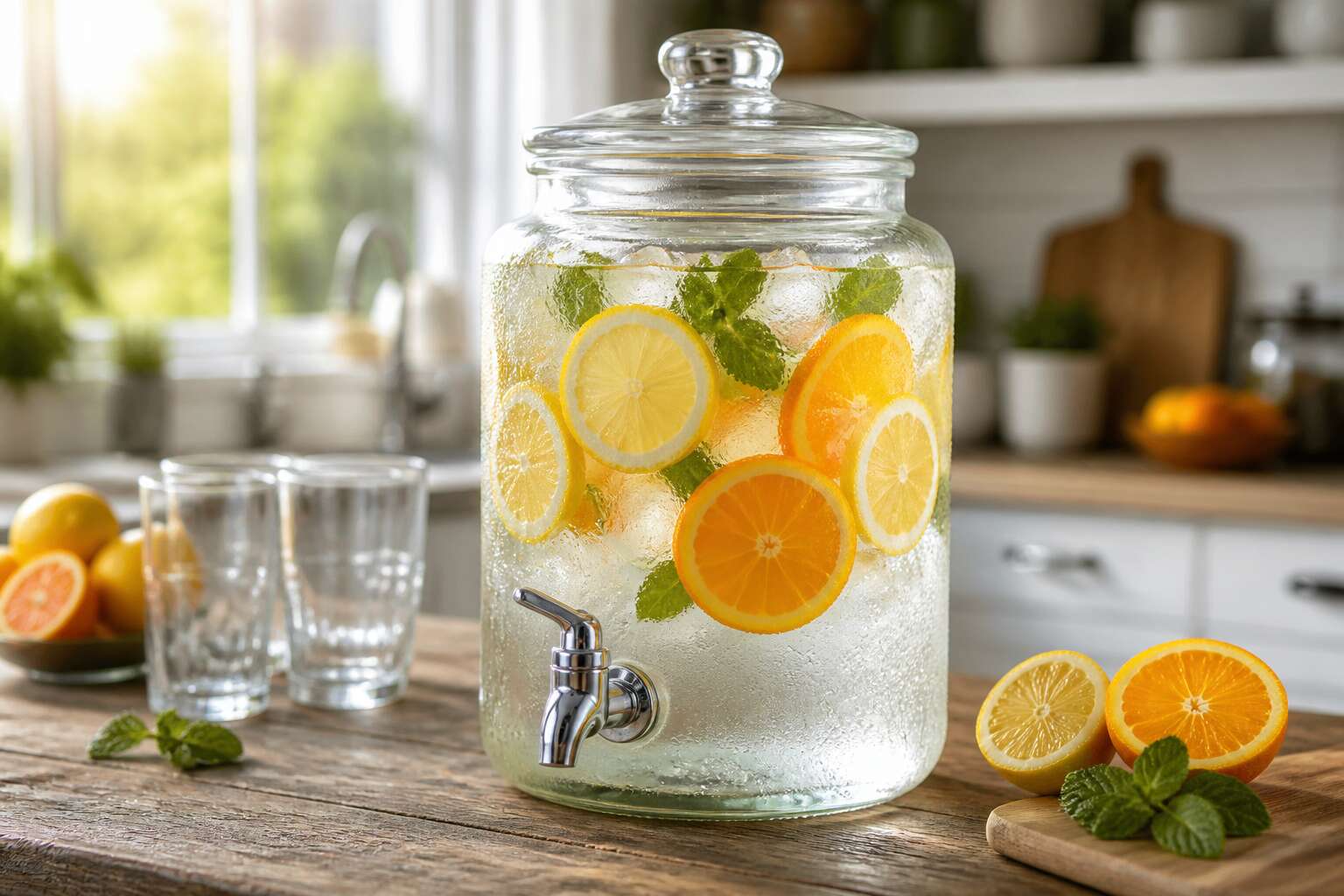
A beverage dispenser is a unit that stores and serves liquids through a tap or nozzle. It can be a simple glass jar with a spigot or a pressurised post-mix system. In South African restaurants and shebeens, these devices cut spillage and maintain drink temperature without constant attention.
The core purpose is portion control and service speed. You avoid opening bottles repeatedly, which preserves carbonation and hygiene. A good dispenser also reduces waste. At a busy event, one unit can pour hundreds of cups per hour.
Typical uses:
- Water stations at weddings
- Cold drink counters at sports clubs
- Juice bars at weekend markets
Understanding what is beverage dispenser starts with how it replaces manual pouring. The tool delivers drinks cleanly and consistently.
How Beverage Dispensers Work
At its heart, the machinery is simple. A beverage dispenser relies on gravity or pressure to move liquid from a reservoir to a tap. In a basic urn, the spigot sits at the bottom, and the weight of the column of liquid does the work. You open the valve, and the drink flows until the pressure equalises.
More complex units add a secondary system. A post-mix dispenser combines concentrated syrup, chilled water, and carbon dioxide at the point of service. This is how a busy shebeen keeps a steady line moving without juggling bottles. The carbonation stays crisp because the gas is injected fresh, not stored in a container that goes flat.
Cooling matters too. Many dispensers run the liquid through a cold plate or an ice bath before it reaches the nozzle. Temperature stays constant even when the venue swells with thirsty customers. Understanding what is beverage dispenser means understanding the full combination of valves, pressure, and temperature.
Key Components and Anatomy
I find it remarkable that most commercial beverage dispensers rely on fewer than a dozen moving parts! That simplicity hides a precise anatomy. The reservoir stores the liquid, often a bag-in-box for post-mix systems. A valve controls flow, while the nozzle shapes the stream. The cold plate manages temperature without stirring.
- Reservoir or syrup bag
- Pressure regulator
- Flow valve
- Nozzle assembly
Each element interacts directly with the next. To understand what is beverage dispenser, inspect these parts. Their material choices, such as stainless steel or food-grade plastic, determine longevity and cleaning ease.
Common Applications
South African restaurants pour thousands of litres of cold drink each week, yet the equipment behind that flow remains invisible to most patrons. I have watched queues build because a single valve failed! That is when understanding what is beverage dispenser technology becomes essential.
The applications reach far beyond fast food. Hospitals, schools, and factory canteens all depend on these machines to deliver safe, consistent refreshment. Consider the common settings:
- Quick service restaurants where staff need rapid refills
- Conference centres serving hundreds of delegates
- Fuel forecourts pairing soft drinks with snacks
Each location demands a different configuration. A specialty coffee bar may use a compact countertop unit, while a stadium concourse needs multiple towers running in unison. The shared requirement is throughput. Whether you pour 50 cups or 5 000 per day, the dispenser must match your volume. This is what is beverage dispenser planning looks like in practice.
Types of Beverage Dispensers
Countertop vs. Freestanding Models
The question of what is beverage dispenser grows more nuanced when you face the countertop versus freestanding divide. Countertop models hug your kitchen surfaces, humble in footprint yet perfectly suited for intimate gatherings. Freestanding units claim a corner of the floor, their voluminous tanks promising uninterrupted service during long events.
I find that each type serves a distinct rhythm. Countertop options prioritize convenience and visibility, while freestanding counterparts emphasize capacity and endurance.
- Countertop: smaller, lighter, easy to reposition.
- Freestanding: heavier, taller, built for heavy traffic.
Your choice ultimately mirrors the scale of your ambitions, from a casual Sunday braai to a bustling festival crowd.
Insulated vs. Non-Insulated Dispensers
To understand what is beverage dispenser in practical terms, consider temperature. The difference between insulated and non-insulated dispensers becomes obvious within minutes, not hours. Insulated units use double walled construction or vacuum insulation to keep cold drinks near freezing or hold coffee scalding throughout a long afternoon. Non-insulated models are simpler, transparent, and depend entirely on ice baths or warming trays to maintain their contents. That dependency is a gamble under the South African sun.
The physics is unforgiving. A non-insulated vessel surrenders to ambient temperature, while an insulated one resists that exchange steadily.
For festival attendees or a family braai, the distinction matters:
- Insulated: maintains temperature for hours without power or extra ice.
- Non-insulated: requires constant attention, more ice, and a nearby power source.
The label may say dispenser, but insulation determines whether that label holds true after three hours in a Durban summer.
Electric and Heated Dispensers
Walk into any conference venue in Johannesburg and you will see the same equipment: a row of electric dispensers, each plugged into a dedicated socket. These machines answer the question of what is beverage dispenser in modern settings: a device that does not rely on insulation alone.
Electric dispensers use thermostats and heating elements to keep liquids at precise temperatures, often within a degree or two. Heated models, by contrast, are built for counter service. They hold espresso, filter coffee, or spiced juice at steaming hot levels for hours. Some units also cool with small compressors.
- Bains-marie heated dispensers for soups or chocolate
- Urn-style coffee brewers with adjustable hot plates
- Pressurised electric urns for continuous flow
These tools shift the burden from passive walls to active control. Bains-marie units bubble softly behind buffet tables, while urn-style brewers dominate office pantries.
Beverage-Specific Dispensers
Some dispensers are built for a single liquid. A juice dispenser with a chilled spiral rod handles pulp-heavy mango juice without clogging, while a coffee urn holds brewed filter coffee for a morning rush. Each design answers what is beverage dispenser in a focused way: a machine matched to the liquid’s viscosity, temperature, and serving speed.
Here is what you see across South African catering operations:
- Iced tea dispensers with wide mouths for lemon slices and mint
- Beer towers using CO2 pressure to maintain carbonation
- Hot chocolate dispensers with agitators to stop cocoa settling
- Milk dispensers with sealed chambers for dairy safety
A soda fountain pushes syrup and carbonated water through separate lines, mixing only at the nozzle. A wine dispenser injects argon gas to preserve an open bottle for weeks. The question of what is beverage dispenser shifts depending on the pour, from a school cafeteria’s juice tower to a cellar’s preservation system.
Smart and Automatic Dispensers
Smart dispensers are redefining what is beverage dispenser in modern venues. These units use sensors to detect when a cup is present, removing the need for physical contact. A touchless pour is essential in busy cafés and conference centres.
Programmable settings allow an operator to control portion size, pour speed, and serving temperature with a digital panel. I have seen models that connect to Wi-Fi and alert staff when a syrup bag runs low or a line needs flushing. This reduces waste and keeps service consistent.
- Sensor activated taps for hygiene
- Digital portion control for cost management
- Remote monitoring for maintenance scheduling
Automatic cleaning cycles are another feature. The machine flushes its own lines at a set hour, which matters for dairy-based drinks in warm climates like Durban. The answer to what is beverage dispenser now includes devices that manage themselves, which saves time and labour!
Benefits of Using a Beverage Dispenser
Portion Control and Cost Savings
A single overfull glass at a school fete becomes litres of wasted syrup over an afternoon. When you understand what is beverage dispenser, you see a tool for discipline. The fixed tap delivers a measured pour every time. No more generous wrist flicks from volunteers. Portion control becomes automatic.
Cost savings follow with little effort. Buying in bulk is only cheaper if you control what you serve. A dispenser stops the constant overpouring and spillage. For a small café in Durban, those rands add up quickly. I have watched venues cut drink costs by switching to a standard tap!
- Consistent serving sizes reduce waste
- Bulky concentrates last longer
- Fewer spills mean fewer cleaning supplies
The true answer is a container that balances your beverage budget.
Convenience and Self-Service
In a busy country hotel or a weekend market stall, a beverage dispenser removes the waiting time. Guests help themselves without needing a bartender. That is the real convenience. I have seen queues shorten quickly when a dispenser sits at the edge of a table. The unit does the serving, and people feel in control.
Self-service also frees staff for other duties. Refilling a dispenser takes seconds. For a community braai or a school function, this makes a noticeable difference. Consider what a dispenser offers:
- No constant refilling of individual glasses
- Guests can pour at their own pace
- Less pressure on volunteer helpers
Understanding what is beverage dispenser helps you see its practical role. It stands ready, never tired, always consistent. That is convenience you can rely on.
Temperature Control and Freshness
A three degree climb can flatten a sparkling drink within minutes. That is why temperature control matters in a dispenser. The unit holds a steady state for hours, protecting freshly brewed iced tea or fruit juice from a warm room. It becomes a barrier against direct sunlight and busy serving moments.
Freshness depends on how little the beverage touches the air. Sealed lids and tap mechanisms limit exposure. That slows oxidation and keeps carbonation intact. For anyone asking what is beverage dispenser, the answer includes this protective role. It is not a simple jug with a spigot.
- Consistent temperature prevents flavor degradation
- Reduced air exposure preserves aroma
Hygiene and Reduced Waste
A beverage dispenser changes how a household manages drinks. When people pour from a closed spigot, their hands never touch the liquid. Shared ladles and open pitchers often carry bacteria. The dispenser prevents that transfer. People wonder what is beverage dispenser, and hygiene proves it. Cleaning one unit takes less time than washing several jugs!
In my experience, waste becomes visible in smaller numbers. A family buying juice in cartons goes through more boxes. A dispenser holds one large batch. Leftover drink returns to a sealed chamber instead of sitting in an open jug. South African kitchens deal with hot summers. A sealed tap blocks ants and dust.
For anyone asking what is beverage dispenser, its effect on daily habits matters:
- Fewer containers to recycle or discard
- No need to throw away stale drinks
- Less water used for rinsing many vessels
That is how a simple machine reduces everyday waste.
Factors to Consider When Choosing a Beverage Dispenser
Capacity and Volume Requirements
Choosing capacity requires arithmetic, not guesswork. A busy weekend market might serve 300 cups of ginger beer, while a boardroom needs only 30 cups of filter coffee. When defining what is beverage dispenser, volume requirements shape every other feature. Match the tank size to your peak hour, not your daily total. Overestimate leads to waste; underestimate leads to queues. For instance, a wedding with 150 guests needs at least 20 litres per hour if each person drinks twice. Consider these points:
– How many people use the dispenser during the busiest 60 minutes?
– What is the average serving size? Most cups hold 250 to 300 millilitres.
– Do you need continuous refills or a single large batch?
Freestanding units hold up to 40 litres, but countertop models cap near 12 litres. Also check the dispensing speed, because a slow pour frustrates everyone. Measure your venue’s electricity access and fridge space before committing to a size.
Material and Durability
A material’s character reveals itself under relentless heat. Durban’s humidity corrodes a poorly sealed unit faster than any single shift. Polycarbonate offers shine but scratches from abrasive washing, leaving hiding spots for microbes. Stainless steel resists rust, yet the wrong grade succumbs to acidic ginger beer in months. Glass preserves purity but shatters under hectic service.
When understanding what is beverage dispenser, the vessel’s physical integrity defines its lifespan. Seams, gaskets, and spigot threads fail first. These are the fragility points.
- The wall thickness in millimetres impacts thermal retention.
- The rubber quality determines whether seals crack.
A thick, well-welded stainless steel structure survives a decade of service, while a thin plastic tank fades and crumbles under Gauteng’s sheer sunlight.
Cleaning and Maintenance Ease
A congealed sugar crust reveals the true test of a beverage dispenser: its post-service ritual. Cleaning and maintenance ease determines whether staff actually do the work. A unit needing a spanner will be neglected. When asking what is beverage dispenser, consider how each component surrenders to soapy water. Threaded spigots trap pulp. Creviced lids hide fermentation.
Check for these maintainability markers:
- spigots that remove without unscrewing multiple parts
- tanks that fit into a standard sink
- gaskets that pop out for washing
A sealed bearing prevents leaks but blocks cleaning. Weigh that trade-off. Durban’s humidity accelerates mould in overlooked corners, so every surface must be reachable. Quick-disconnect fittings and smooth internal corners cut the time between service and readiness. That hour saved each evening compounds into a year of trading.
Temperature Retention or Heating Options
When weighing temperature retention or heating options, the question of what is beverage dispenser becomes a matter of thermal endurance. A double-walled vacuum tank keeps iced tea cold for eight hours without electricity, yet a heated unit draws 800 watts and needs a dedicated socket. Each serves a different trade environment.
Consider a busy Durban market: self-service urns lose heat every time the lid lifts. A pump-fed model beats a spigot unit, because every manual pour lets cold air rush in. For hot chocolate or rooibos, a thermostatically controlled element holds 85°C without boiling.
- Assess ambient temperature. Cape Town winter venues need more heating capacity than Johannesburg summer spots.
- Check recovery rate, not just idle holding temperature.
- Match wattage to your power supply, especially under load shedding.
The right thermal system shortens the gap between service and readiness. That is the real measure of what is beverage dispenser value.
Ease of Dispensing and Flow Control
The ease of dispensing defines the daily rhythm of service. A lever that sticks, a spigot that drips, these small failures erode patience and profit. When asking what is beverage dispenser worth, consider how it pours. A push-button valve offers precise control, but it adds moving parts that can fail.
Flow rate matters too. A slow drip tests customers during peak hours. A violent surge causes splashes and waste. Look for a baffle or drip tray that handles overflow.
- Test the spigot action before buying.
- Check if the nozzle drips after closing.
- Consider whether the unit has a splash guard.
Every pour should be deliberate, not a gamble. That is the quiet measure of what is beverage dispenser quality.
Beverage Dispenser Maintenance and Care
Daily Cleaning Procedures
Residual sugar from a busy day’s service turns a dispenser’s interior into a microbial haven overnight. That is why understanding what is beverage dispenser includes a commitment to daily cleaning procedures. The process takes ten minutes, but it protects every litre poured afterwards.
Begin by stripping the machine. Remove nozzles, drip trays, and any detachable lids. Wash these parts in hot, soapy water. Use a soft brush to dislodge dried syrup or pulp. Rinse thoroughly under clean water. Sanitize with a food-grade solution, then let everything air dry.
A practical sequence for routine upkeep:
- First, flush lines with warm water for two minutes.
- Second, scrub all contact surfaces with a designated cloth.
- Third, wipe the exterior and touchpoints.
- Fourth, reassemble only after full drying.
This daily rhythm prevents clogs and flavour haze. So when someone asks what is beverage dispenser, the answer involves the careful attention it receives each morning.
Deep Cleaning and Descaling
Water hardness in South African municipalities varies wildly, from the soft rainfall of the Cape to the mineral-rich boreholes of the Karoo. That variation dictates how often a dispenser needs descaling. Scale accumulates on heating elements and inside tubing, reducing the machine’s lifespan. Monthly deep cleaning with a citric acid solution dissolves these deposits before they cause mechanical failure.
For the descaling process itself, use this sequence:
- Drain the tank completely and disconnect power.
- Run a food-grade descaler through the lines.
- Rinse with fresh water until no residue remains.
Understanding what is beverage dispenser means recognising that even a spotless exterior can hide stubborn biofilm. Descaling is the difference between a machine that lasts a decade and one that fails within two years.
Replacing Parts and Accessories
Parts wear out. The seals around dispensing nozzles, the gaskets on lids, and the small valves controlling flow face daily abuse. UV exposure and cleaning chemicals accelerate this process, so components degrade at different rates.
Understanding what is beverage dispenser includes accepting that replacement parts are part of the cost of ownership. A perished O-ring causes drips. A faulty tap handle causes inconsistent pours.
Waiting for failure is expensive. The components that typically need attention include:
- Dispensing taps and spigots
- Seals and O-rings
- Heating elements
- Flow control valves
Manufacturers supply genuine spares. Compatible aftermarket parts can work, but tolerances differ. A mismatched gasket creates leaks. A wrong-sized valve restricts flow.
Regular inspection catches wear before it becomes damage. Drips and sticking levers signal that a component has reached the end of its service life. Replacing those parts keeps the dispenser functioning.
Storage and Seasonal Care
Storage and seasonal care separates well-prepared owners from those who discover problems too late. A beverage dispenser that sits unused for weeks, especially after a summer of constant service, needs deliberate attention. Residual liquid becomes a breeding ground for bacteria, and stagnant water leaves scale deposits that resurface later.
South Africa’s climate adds its own demands. In regions with cold winters, outdoor dispensers face temperature swings. Insulated models handle this better, but no unit survives pure neglect. A sensible storage routine involves:
- Draining every line completely
- Storing lids slightly ajar to prevent mould
- Keeping units out of direct sunlight during downtime
Seasonal rotation affects what is beverage dispenser in practice. A unit that dispensed ice-cold juice in December becomes a liability in July if ignored. Understanding what is beverage dispenser includes proper off-season storage, so regular checks during dormant months preserve functionality.

0 Comments