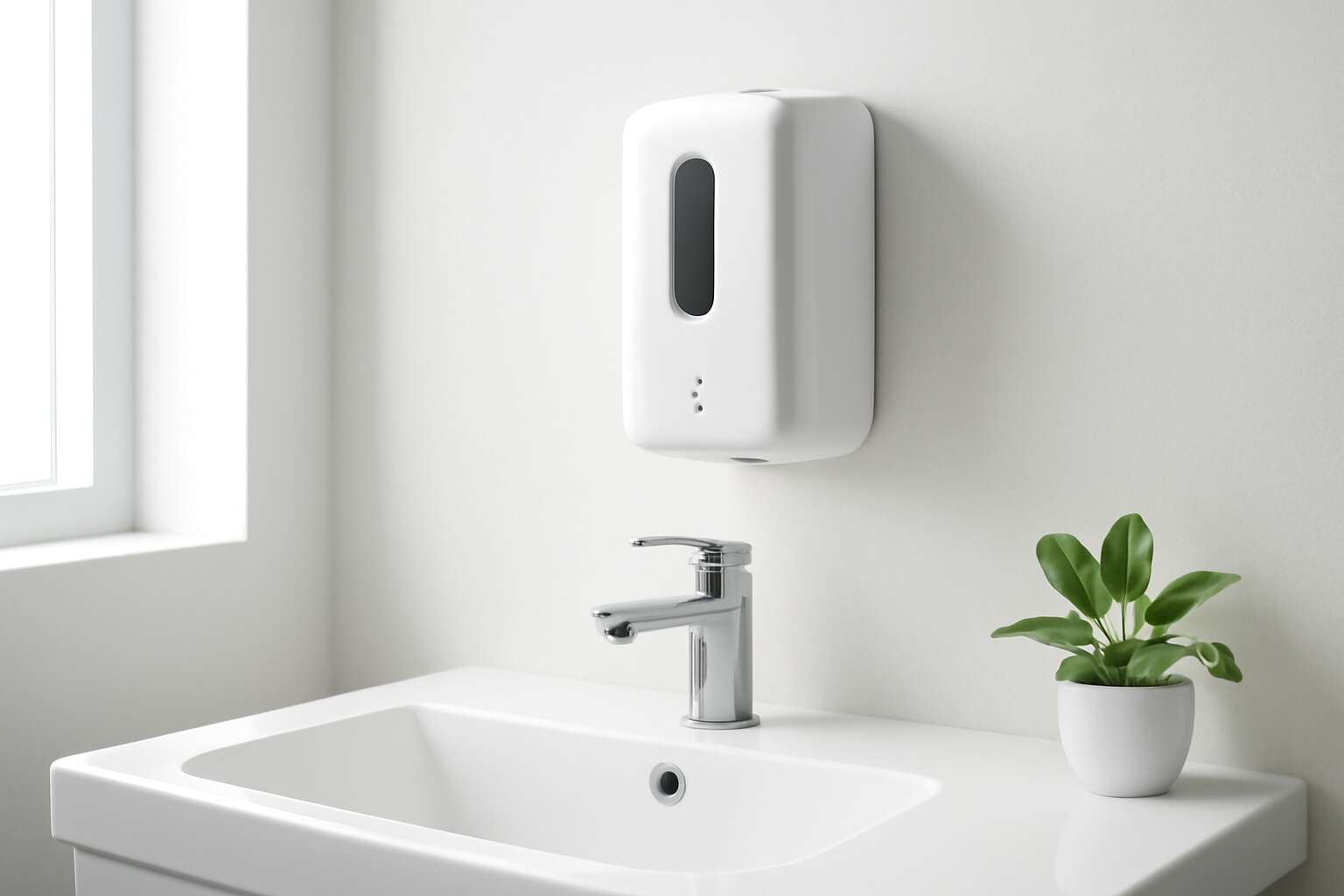
Hand Hygiene Dispenser Overview
What is a hand hygiene dispenser and how it works
A single touch can spark a healthier workplace! In healthcare and hospitality across South Africa, proper hand hygiene can cut infection risk by up to 50%. A reliable system keeps hands clean when it matters most, turning ordinary moments into safer experiences.
A handwash dispenser is a compact station that releases a measured amount of soap or sanitizer in response to a sensor, foot pedal, or lever. It turns a routine habit into a precise, hygienic ritual.
Its design supports clean, fast hand hygiene across settings. Key advantages include:
- touch-free operation
- adjustable dispense volumes
- low-maintenance refills
- robust, easy-to-clean surfaces
In schools, offices, and clinics in South Africa, a well-chosen station adapts to foot traffic, ensures consistent dosing, and supports local health initiatives with quiet reliability.
Common types used in healthcare and commercial spaces
Across South Africa, proper hand hygiene slashes infection risk by up to 50% in healthcare and hospitality. A well-chosen handwash dispenser keeps pace with busy moments, turning routine handwashing into a reliable habit rather than a rushed chore!
Common types used in healthcare and commercial spaces include:
- Sensor-activated units for touch-free operation
- Manual lever models that perform reliably in high traffic
- Compact, wall-mounted stations designed for tight spaces
These configurations are built for durability, easy cleaning, and consistent dosing, ensuring hands stay clean when and where it matters most across busy clinics and offices.
Benefits of using a dispenser for hygiene and cost savings
In South Africa, proper hand hygiene slashes infection risk by up to 50% in healthcare and hospitality. A well-chosen handwash dispenser converts moments of urgency into reliable rituals, keeping hygiene steady when the day spirals. With controlled dispensing of foam or gel, it reduces waste and invites regular hand care.
Key benefits include:
- Consistent dosing minimizes waste
- Touch-free models curb contamination
- Durable builds withstand high-traffic areas
- Simple refills keep downtime to a minimum
Beyond hygiene, such systems translate into cost savings on soap consumption and water usage, creating sustainable ROI for clinics, offices, and hospitality hubs.
Key terms and features to look for
Bold claim, big impact: a dependable handwash dispenser is the unsung hero of any busy space. It delivers the right amount, keeps the line moving, and saves soap with every press. In South Africa, proper hand hygiene can cut infection risk by up to 50% in healthcare and hospitality.
Key terms and features to look for include:
- Sensor accuracy and fast response
- Dispense volume per activation
- Power options: batteries or mains
- Vandal-resistant materials and compact form
- Refill system: sealed cartridges and easy maintenance
Also consider foam or gel compatibility, ease of cleaning, splash guards, mounting flexibility, and warranty. A sturdy, well-designed unit survives high-traffic corridors and keeps staff focused on the real work—hand hygiene with flair.
Impact on compliance and sanitation standards
In healthcare and hospitality, proper hand hygiene can cut infection risk by up to 50%, a statistic that travels through every corridor when a handwash dispenser stands steady and reliable.
More than a soap station, the device becomes a quiet conductor of compliance, guiding hands with unhurried grace and keeping sanitation standards in step with the pace of the day.
- Consistency across shifts supports patient and guest safety
- Visible cues reinforce proper technique without nagging reminders
- Audit-friendly maintenance and refill cycles streamline housekeeping operations
In design and function, the unit blends vandal-resistant materials with a compact silhouette—a small artefact with a grand purpose, quietly shaping hygiene as a shared value.
Types of dispensers for hand hygiene
Manual, touchless and sensor-based models
Across busy spaces, studies have shown that touchless and sensor-based designs cut cross-contamination by up to 40%. A well-chosen handwash dispenser does more than deliver soap—it turns routine hygiene into a quiet, alchemical ritual.
Manual, touchless, and sensor-based models each weave a different spell. The manual is familiar and cost-effective; the touchless uses infrared sensing to detect hands; the sensor-based platforms pair automatic dosing with data insights.
- Manual: user-activated and dependable in low-power environments.
- Touchless: reduces contact and contamination risk, powered by batteries or mains.
- Sensor-based: smart dosing, activity analytics, and optimal soap use in high-traffic zones.
In South Africa’s bustling venues, durability, local service networks, and water-saving features matter. A thoughtfully chosen handwash dispenser anchors hygiene in daily life, blending practicality with a hint of enchantment that keeps staff and guests smiling as they wash.
Wall-mounted vs freestanding designs
In crowded spaces, the right hand hygiene setup feels like a bit of magic—where soap appears at arm’s reach and clutter disappears. As one facilities manager jokes, “Placement is everything in hygiene.” That bite of wisdom guides whether you choose wall-mounted or freestanding dispensers for your venue.
Wall-mounted options shine when space is precious: they keep floors clear, deter splashes, and simplify refills. A robust wall unit supports a steady flow of soap in high-traffic corridors, restrooms, and service areas, with electrical or battery power depending on your preference.
- Wall-mounted: space-saving, tamper-resistant, easy stock-checks
- Freestanding: flexible layout, quick retrofits, portable for events
Freestanding dispensers bring mobility to lobbies, foyers, or temporary setups where walls are busy or fixtures limited. For a seamless experience, choose models labelled as compact, stable, and lockable; the right handwash dispenser keeps hygiene accessible without a hitch.
Refillable vs cartridge systems
Placement is everything in hygiene, a truth that lands with force in busy lobbies. A facilities manager once joked, “Placement is everything in hygiene,” and the point sticks: the right handwash dispenser guides hands to cleanliness without a splash of drama.
Refillable models prioritise sustainability and long-term cost, but they require routine stock checks and proper refills. Cartridge systems keep downtime to a minimum—quick swaps, consistent dosing, and less risk of contamination. For many South African venues, the choice hinges on traffic, maintenance cycles, and the ease of refills during peak hours.
- Refillable option: lower waste, full stock visibility, longer service life.
- Cartridge option: quick changes, cleaner hands, simpler inventory.
Whichever route you pick, the right system blends with your space, ensuring a reliable flow to entrances, restrooms, and corridors.
Materials and durability considerations
Cleanliness is uptime, and in crowded venues every second counts. A facilities manager quipped, “If the dispenser isn’t reliable, cleanliness never stands a chance.” From brushed stainless steel to durable plastics, the dispenser landscape must endure heat, knocks, and constant use while staying visually tidy in lobbies and restrooms.
- Stainless steel (304/316): corrosion resistance
- ABS or polycarbonate plastics: impact resistance
- Tritan or engineered blends: clarity and toughness
- Ceramic accents for premium look (maintenance required)
Ultimately, South African venues benefit from choosing material and durability that match traffic, cleaning routines, and climate. A sturdy handwash dispenser keeps entrances and corridors flowing with reliability rather than drama.
Specialty dispensers for high-traffic areas
Every second counts in South Africa’s bustling venues, where queues curl like smoke and reliability is the unseen conductor! In this theatre of motion, the handwash dispenser becomes more than a device—it is order incarnate, quietly guiding patrons to cleanliness without a pause in flow. Choose forms that endure heat, knocks, and the bustle of crowds while remaining visually discreet.
Specialty dispenser options for high-traffic areas include:
- High-capacity wall units designed to accept bulk refills, minimizing refill stops
- Freestanding column dispensers that anchor long corridors and entryways
- Multi-station inline systems that serve busy entrance foyers without crowding
In South Africa, align these choices with cleaning routines, climate, and the rhythm of foot traffic—letting the routine of hand hygiene flow like a steady, unspoken oath.
Features that boost usability and hygiene
Dispensing mechanism accuracy and pulse control
Small pulses, big impact—the quiet rhythm of a well-tuned handwash dispenser. In bustling spaces across South Africa, precision is hygiene’s best ally, and the dispensing mechanism accuracy that underpins each dose matters as much as the soap itself. When a nozzle delivers a steady pulse, users feel confident; when it falters, waste follows. The right device turns routine cleansing into a ritual of consistency.
Key features that boost usability and hygiene for the handwash dispenser include:
- Precise dispensing delivers uniform doses and minimizes waste.
- Pulse control maintains a consistent volume with every use.
- Adjustable dosing accommodates different soaps and user needs.
- Anti-drip, tamper-resistant design keeps sinks clean and safe.
- Responsive sensors and clear indicators aid first-time users.
Together, these elements elevate every wash, making it more than a sinkside gadget—a quiet guardian of hygiene that rewards accuracy with reliability.
Soap compatibility and viscosity handling
Across South Africa’s bustling corridors, the handwash dispenser you choose can turn a routine wash into a ritual of certainty. When a device respects soap’s temper—whether a delicate foam or a sturdy gel—the user breathes easy, and waste fades.
Features that boost usability and hygiene include:
- Soap compatibility and viscosity handling that adapts to varied formulas
- Precise dosing that preserves lather and minimizes waste
- Anti-drip, tamper-resistant design for clean, safe sinks
When these elements align, every wash becomes a confident gesture of care—quiet, reliable, and essential.
Illumination indicators and visibility
Bright cues turn routines into rituals across South Africa’s bustling corridors. As one facilities manager puts it, “Visibility is hygiene’s first cue.” A handwash dispenser with illumination indicators becomes a compass in the dim, guiding hands to the tap with quiet certainty. Readiness lights, standby glows, and low-soap alerts offer real-time feedback—hushing hesitation and supporting steady compliance in crowded spaces.
- LED status lights on the handwash dispenser adapt to ambient light for quick recognition
- Transparent viewing window to monitor soap level at a glance
- High-contrast bezels and tactile cues that aid all users, including those with limited vision
Illumination becomes an invisible partner in everyday hygiene.
Tamper resistance and safety features
Across South Africa’s busy corridors, a handwash dispenser is more than a soap pump—it’s a quiet hygiene ally. A well-made unit guides hands with confident, reliable operation, turning routine into ritual even when foot traffic surges and the room hums with activity.
In terms of safety and maintenance, rugged housings, secure mounting, and leak-minimising seals matter as much as how smoothly the pump works. I’ve seen antimicrobial coatings and easy-clean surfaces keep the device hygienic between servicing cycles.
To deter tampering and misuse, built-in safeguards are essential.
- Lockable reservoir and secure mounting
- Tamper-evident seals and anti-pry screws
- Anti-drip nozzle and vandal-resistant design
- Motion or pressure-trigger alarms when tampering occurs
- Chemical-resistant housing for long-term durability
These features ensure the handwash dispenser remains a steadfast guardian of public health in busy environments.
Accessibility features and ADA compliance
In the maze of South Africa’s busy spaces, thousands of hands pass surfaces daily—the handwash dispenser should feel like a trusted ally, not a puzzle to solve. Usability blends with hygiene when controls respond with calm precision, and reach is crafted for all bodies. ADA-compliant ideas translate here as adjustable mounting height, clear feedback, and fuss-free operation that invites every user to sanitize with ease!
- Adjustable mounting height to accommodate wheelchairs and standing users
- High-contrast, tactile indicators for quick recognition
- Responsive, sensor-based actuation for touchless use
Beyond these, easy-clean surfaces, anti-drip seals, and clear feedback cut maintenance time and boost confidence in hygiene routines. The result is a device that serves diverse communities with quiet reliability.
Choosing the right dispenser for your environment
Assessing space footprint and mounting options
Across South Africa’s bustling workplaces, a well-placed handwash dispenser can reduce wasted steps and faux pas—it’s the silent but mighty enforcer of clean hands. The right unit slips into the flow of a room, almost invisible, until thirsty hands appear and relief follows.
When choosing, size and reach matter more than flashy labels. Assess the footprint, the surface you’ll mount on, proximity to sinks, and whether a subtle fixed unit or a discreet pedestal won’t clash with décor or traffic patterns in your space.
Consider these practical aspects:
- Footprint relative to sink, doorway, and traffic flow
- Mounting surface compatibility and splash protection
- Refill access, maintenance ease, and sensor power (if applicable)
Get the balance right, and your space stays tidy, compliant, and impressively hygienic.
Refill intervals capacity and inventory management
Choosing the right handwash dispenser for your environment means balancing capacity, reliability, and the rhythm of your space. In bustling South African offices, factories, and schools, a sturdy unit that lasts through shifts keeps queues short and hands clean. It should blend quietly with decor and traffic flow.
Refill intervals and inventory management are the quiet backbone of hygiene. A larger reservoir cuts restocking trips, but you need a predictable refill cycle and a simple way to track consumption. In SA, set minimum stock levels, monitor usage weekly, and align with local suppliers to avoid outages.
- Capacity and refill frequency
- Inventory visibility and reordering
- Lead times and backup stock
Done right, it reduces waste, boosts compliance, and keeps hygiene routines steady.
Total cost of ownership and lifecycle considerations
In South Africa’s bustling offices, factories, and schools, the handwash dispenser is the quiet workhorse of hygiene. A field snapshot suggests unreliable units waste up to 15 minutes per shift chasing refills. Total cost of ownership isn’t just the sticker price—durability, spare parts, warranty, and service intervals matter as much as a good soap. Choose a unit built to survive high traffic, with simple maintenance, and local support. It’s lifecycle thinking in disguise, and it pays off in uptime and clean hands.
To balance upfront price with long-term value, weigh these factors:
- Initial price vs total cost of ownership
- Maintenance, parts availability, and spare lifecycle
- Reliability, uptime, and service support
- Warranty terms, upgrade paths, and end-of-life handling
Healthcare food service and hospitality use cases
Choosing the right handwash dispenser hinges on where it lives. In busy South African clinics, kitchens, and hotel foyers, reliability means hands stay clean with minimal disruption. A sturdy unit reduces downtime, and simple maintenance keeps staff focused on care and service.
- Healthcare environments demand tamper resistance, easy cleaning, and soap compatibility that handles sanitizer without clogging.
- Food service requires splash protection, quick refills, and cartridge options that minimise cross-contamination during peak shifts.
- Hospitality benefits from a compact footprint, clear status indicators, and rugged construction for high-traffic areas.
Choose a model backed by local support, easy access to spare parts, and predictable service schedules. It’s uptime you can count on—clean hands, and peace of mind for teams that never stop!
Installation maintenance and best practices
Pre-installation planning and placement guidelines
Every hand reaches for certainty in a crowded space. In high-traffic facilities, proper hand hygiene reduces infection rates by up to 40%—and a reliable handwash dispenser becomes more than hardware; it is policy in motion!
Pre-installation planning isn’t glamorous but it’s where resilience begins. Consider water supply, drainage, electrical needs for sensors or pumps, and the wall’s capacity to withstand daily use. A thoughtful layout respects flow, sightlines, and the door’s path to minimize congestion.
- Water and drainage compatibility
- Power or battery needs for sensors
- Maintenance access for refills and service
- Secure mounting that resists tampering
Placement guidelines follow: position near sinks, within reach for varied users, and away from splash zones. Align with local building codes and accessibility policies, and choose a design that harmonizes with the space while remaining easy to clean and inspect.
Installation steps and mounting tips
Installation maintenance and best practices for a handwash dispenser demand more than exact screws; they demand intention across South Africa’s busy facilities. After mounting, wipe the surface, select robust anchors for the wall, and set the unit at an accessible height that aligns with sinks and foot traffic. A small test—watch how users flow past without interference—prepares the space for reliable hygiene. Precision today reduces follow-up calls tomorrow!
Key considerations for mounting and ongoing care focus on alignment with the sink line, clear sightlines for users, and easy access for refills and service without disturbing traffic. Choose secure mounting that resists tampering yet allows quick maintenance, and ensure the surface is clean and dry before any accessory install. In busy South African environments, durable finishes resist fingerprints and grime, while visible indicators guide quick checks during shifts.
Routine maintenance refilling and cleaning schedules
“Maintenance is medicine for the washroom,” a facility manager likes to say. In South Africa’s bustling facilities, a well-tended handwash dispenser keeps queues flowing and grime at bay. Set a routine: daily wipe-down of the exterior, weekly refilling checks, and monthly sensor or nozzle inspection. A disciplined cadence reduces faults and follow-ups, and keeps hygiene uncompromised across shifts.
- Daily exterior wipe and dry help deter fingerprints
- Weekly refills and inventory reconciliation support consistent supply
- Monthly inspection of mounting, seals, and sensor calibration sustains reliability
Consider color-coded indicators or digital reminders, so teams stay aligned about the handwash dispenser routine. Document the schedule and store spare parts nearby; this enables quick maintenance without disrupting foot traffic.
Troubleshooting common issues and support options
In South Africa’s busiest facilities, a single hiccup can ripple through queues and test hygiene discipline. A dependable unit is a quiet ally—steady, predictable, and forgiving when teams are rushed. Routine checks keep it performing like clockwork, day after busy day.
Troubleshooting common issues is about reading symptoms rather than guessing at causes.
- Intermittent dispensing or no spray when hands approach (sensor or power fault)
- Weak or variable soap flow due to viscosity or cartridge issues
- Leaks around seals or mounting from improper seating
Should issues persist, consider these support options:
- Manufacturer warranties and official service networks
- Local South Africa–based technicians and partner networks
- Remote diagnostics and helpdesk support for faster triage
Smart installation maintenance and best practices—color cues, digital reminders, and nearby spares—minimise downtime and sustain a well-lit, accessible handwash dispenser for all shifts.



0 Comments